
Back to all blog posts

HR budgets aren't keeping pace with what employees expect. You're supporting a more distributed, multigenerational workforce with roughly the same dollars you had last year, while employees quietly compare your employee benefits package against whichever employer offers more flexibility. An ad hoc collection of perks, added one at a time as requests come in, doesn't hold up under that kind of pressure.
A quarter of employers now work with more than 20 vendors across their health and wellness benefits portfolio alone, according to PwC's Employer Benefits Perspective Survey, cited in Benepass's 2026 Benefits Benchmarking Guide. That kind of sprawl creates blind spots in cost, uneven utilization, and no clear story to tell leadership at renewal.
A documented employee benefits strategy fixes that. This guide covers what a strategy actually includes, why it matters more now than in past years, and a seven-step framework for building or rebuilding yours so it holds up to scrutiny, not just goodwill.
An employee benefits strategy is the documented plan that covers benefit costs, program design, communication, delivery, and compliance. It sits above the individual perks list, turning benefits added one at a time, a wellness stipend here, a commuter subsidy there, into a coordinated system that finance can forecast, compliance can defend, and leadership can evaluate against real outcomes. Together, these programs make up your organization's non-wage compensation, the value employees receive beyond salary.
Without that structure, most programs are the sum of separate vendor relationships rather than a plan anyone designed on purpose. A strategy gives you a single reference point for what you offer, why you offer it, and how you'll know if it's working.
Three forces make this worth doing well right now.
Benefits have become a deciding factor before a candidate ever gets to a compensation conversation. Eighty-four percent of employers say benefits are critical for attracting and retaining talent, according to a 2025 LIMRA and EY study of the workforce benefits market. A documented strategy lets you describe a coherent package instead of listing perks ad hoc during interviews, which sharpens your position against competitors making the same pitch for the same candidates. That's the foundation of a strong employee value proposition: a benefits story you can back up with data.
Retention stayed the top HR priority in 2025, ranking above cost management in Gallagher's workforce trends research. That focus makes sense once you look at the cost of getting it wrong: rising turnover rates mean replacing an employee now runs employers an average of $45,236. A strategy built around what your workforce actually uses, rather than what's easiest to administer, gives you a defensible reason to keep people from looking elsewhere.
Employees read your benefits as a signal that the company values them beyond the paycheck. When employees have a positive experience with their benefits, they're 1.8 times more likely to trust their employer’s leadership, according to MetLife's 2025 Employee Benefit Trends Study. That trust shows up in day-to-day employee engagement and satisfaction long before it shows up in a survey score.
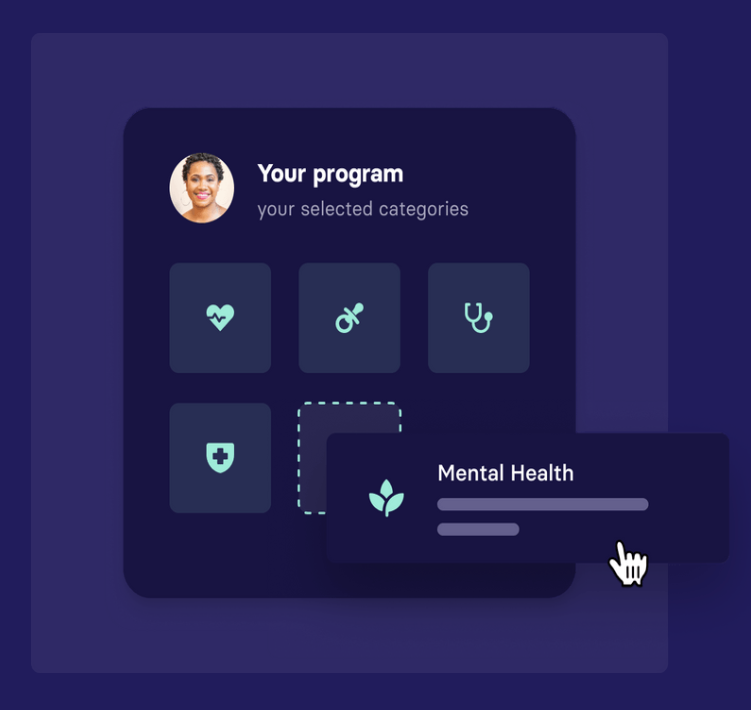
Every strategy needs to account for five categories, even if you don't offer something in each one.
Depending on where you operate, some benefits aren't optional. In the U.S., these typically include:
Confirm your specific obligations with counsel, since mandatory benefits vary by state and by headcount.
Health benefits remain the anchor of most packages, but the coverage details matter more than they used to. Common components include:
As specialty drug costs and GLP-1 demand push medical spend higher, more employers are leaning on pre-tax accounts to protect take-home pay without expanding the medical plan itself.
Financial benefits address the rising financial stress many employees carry outside of work. Typical offerings include:
Lifestyle spending accounts have moved from a niche perk to the default way many employers consolidate wellness, family care, and professional development spend into a single program. A lifestyle spending account gives employees a defined allowance to spend across categories you choose, rather than negotiating a separate vendor contract for every use case.
That consolidation is paying off. Lifestyle spending accounts post an average utilization rate of 83%, well above what most single-purpose stipends see on their own. Common categories include:
Work-related benefits remove friction from doing the job itself:
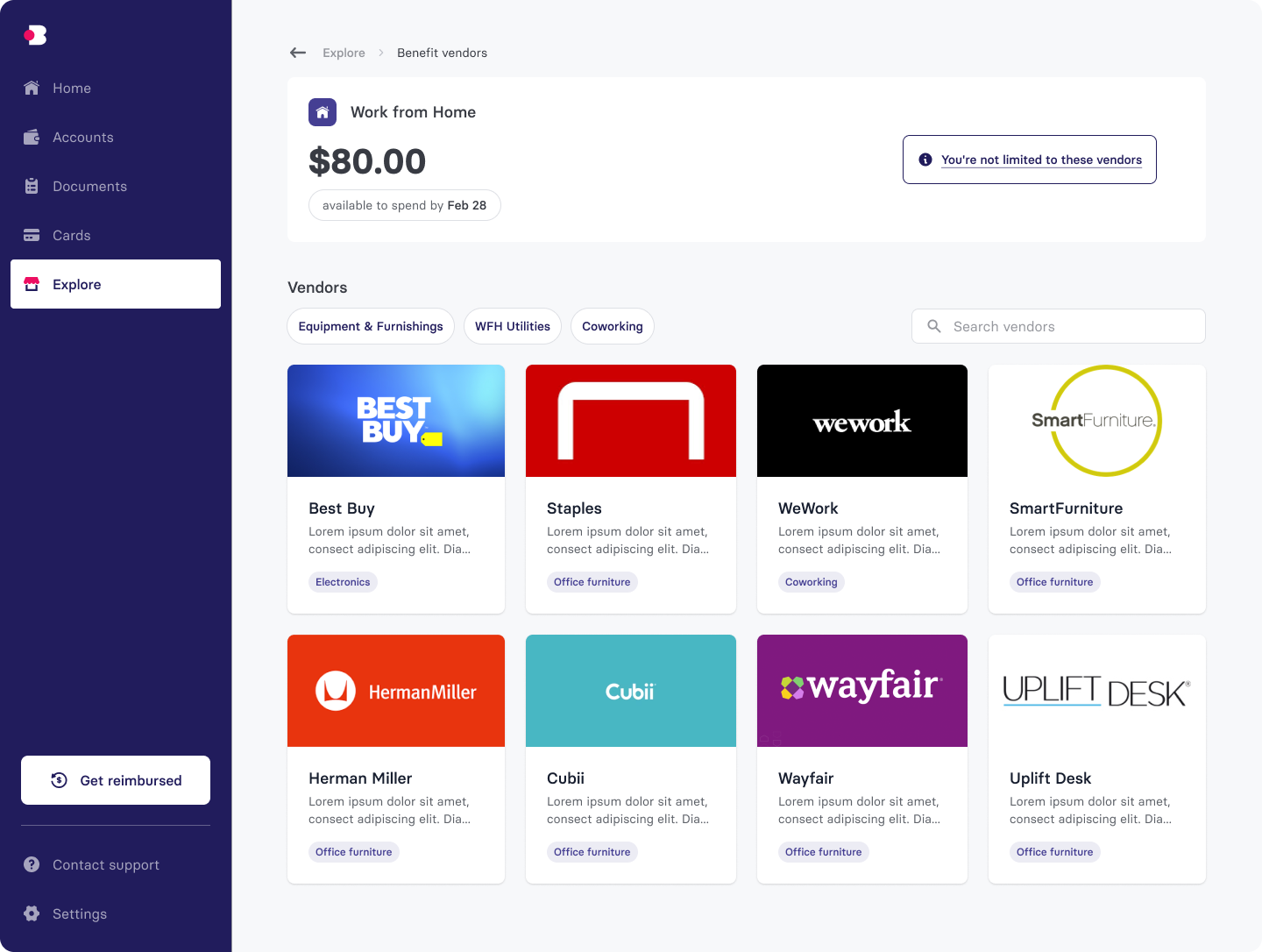
Once you understand what a strategy includes and why it matters, building one comes down to a repeatable benefits planning process. Here's the version that replaces overlapping, one-off decisions with a single path from goal-setting through ongoing review.
Start by writing down what you want your benefits strategy to accomplish and connect it to a business goal, not a wish list. Common goals include:
Use the SMART framework, specific, measurable, attainable, relevant, and time-bound, to turn a vague goal like improve retention into something you can actually track.
Your budget determines what's realistic before you get attached to a wish list. Benefits typically account for roughly a third of total compensation costs, per the U.S. Bureau of Labor Statistics' Employer Costs for Employee Compensation data, so treat that budget with the same rigor you'd apply to any other major line item.
Factor in costs beyond the sticker price: implementation fees, administrative overhead, and what happens to unused funds. If an employee only spends $80 of a $100 monthly allowance, know upfront whether that $20 returns to the company or is lost, since the answer changes how you calculate the real cost of the program.
Once you know your budget, compare it against what similar employers are actually spending, not general industry assumptions from a few years back. The 2026 Benepass Benefits Benchmarking Guide draws on data from 280+ employers representing more than 500,000 employees across 90 countries, giving you a current reference point for contribution amounts, utilization, and program design by company size, industry, and employee demographics.
Use that data to benchmark specific line items, like commuter allowances or LSA contribution amounts, rather than benchmarking your entire program against a single competitor.
Your budget and benchmarks mean little if the program doesn't match who's actually on your team. Start by separating must-haves (legal obligations and baseline expectations) from nice-to-haves (benefits that support your specific goals) and benefits you're rejecting for now.
Then map that list against your actual workforce demographics, pulled from your HRIS data rather than assumptions about what most employees want. A team split across parents managing childcare, employees supporting aging parents, and early-career hires with different priorities altogether won't respond to the same fixed benefit the same way. Segmenting first keeps you from designing a program that only fits the loudest voices in the room.
Move away from a one-size-fits-all model and let employees choose from a defined set of options that fit their life outside of work. This could mean flexible spending categories within a lifestyle spending account, a menu of health plan options, or simply the ability to redirect unused funds from one category to another.
Employees increasingly expect this kind of choice by default. Offering a single, rigid package and calling it comprehensive no longer clears the bar it used to.
A benefits program only works if people understand it and use it. Build a communication plan that covers where to enroll, what it costs, and how each benefit fits into an employee's actual life, not just a one-time email during open enrollment.
Then close the loop by asking employees what's working. A short employee benefits survey can surface gaps you wouldn't catch from utilization data alone, like a benefit that's technically popular but poorly understood. Treat this as a standing practice, not a one-time check-in tied to a single rollout.
Bring measurement, compliance, and delivery review together into one recurring cycle instead of three separate efforts. Track a small set of metrics that connect to your original goals, such as participation rates, retention among benefit users versus non-users, and time to resolve benefits-related questions.
At the same time, revisit your compliance obligations, since requirements around paid leave, COBRA notices, and plan documentation change more often than most benefits calendars account for. Pair that compliance check with a look at delivery: if employees need three clicks and a separate login to find a benefit, low utilization usually follows. Put all three reviews on the same annual calendar so nothing falls through when priorities shift mid-year.
The strongest benefits strategies hold up under a specific kind of pressure: a CFO asking why the budget increased, or a board member asking what employees are actually using. What holds up in that moment is a coordinated system with clear data behind every decision, not the length of your benefits list.
Build toward that outcome deliberately. Track participation and cost by category. Know which programs are driving retention and which are quietly underused. Revisit the plan on a set schedule instead of reacting whenever a benefit request lands in your inbox. That's what turns a benefits strategy from a document you wrote once into a system leadership actually trusts at renewal and budget time.
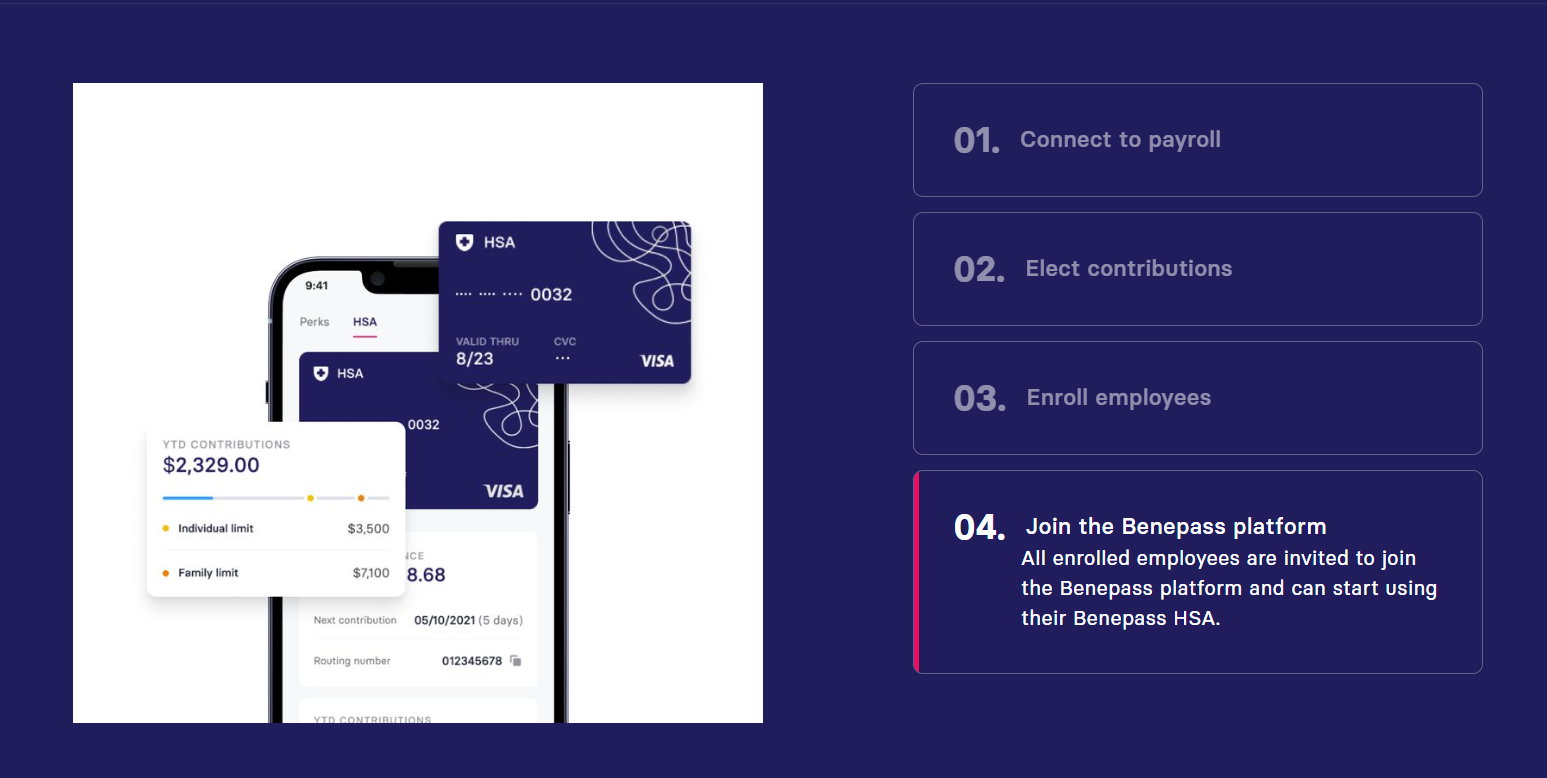
Platforms like Benepass make that kind of system easier to build and defend. See how Benepass helps HR teams put every part of their benefits strategy, from pre-tax accounts to lifestyle spending, on one platform with the participation data leadership actually wants to see.
Book a demo to see how it fits your workforce.
