
Back to all blog posts

A health reimbursement arrangement looks simple on paper. You set a budget, define what's eligible, and employees get reimbursed tax-free. In practice, the administration is where most HRAs break down.
Receipts sit in inboxes waiting for review. Substantiation gets handled inconsistently, which creates IRS exposure. Employees who fronted $400 for a specialist visit wait weeks to get paid back, and the next time, they just don't bother. That last problem is costly in a quieter way: every dollar an employee doesn't claim is part of a benefit you're paying to run that never reaches them.
The stakes rise with headcount. When an HRA covers thousands of employees across several plan designs, such as a weight health HRA for GLP-1s alongside fertility or mental health HRAs, small administration gaps turn into audit findings, support tickets, and benefits budget that never gets used.
If you're reviewing your HRA administrator ahead of renewal, or adding targeted HRAs around your health plan, this shortlist covers six options and how to compare them.
Every administrator below was evaluated on the same four factors:
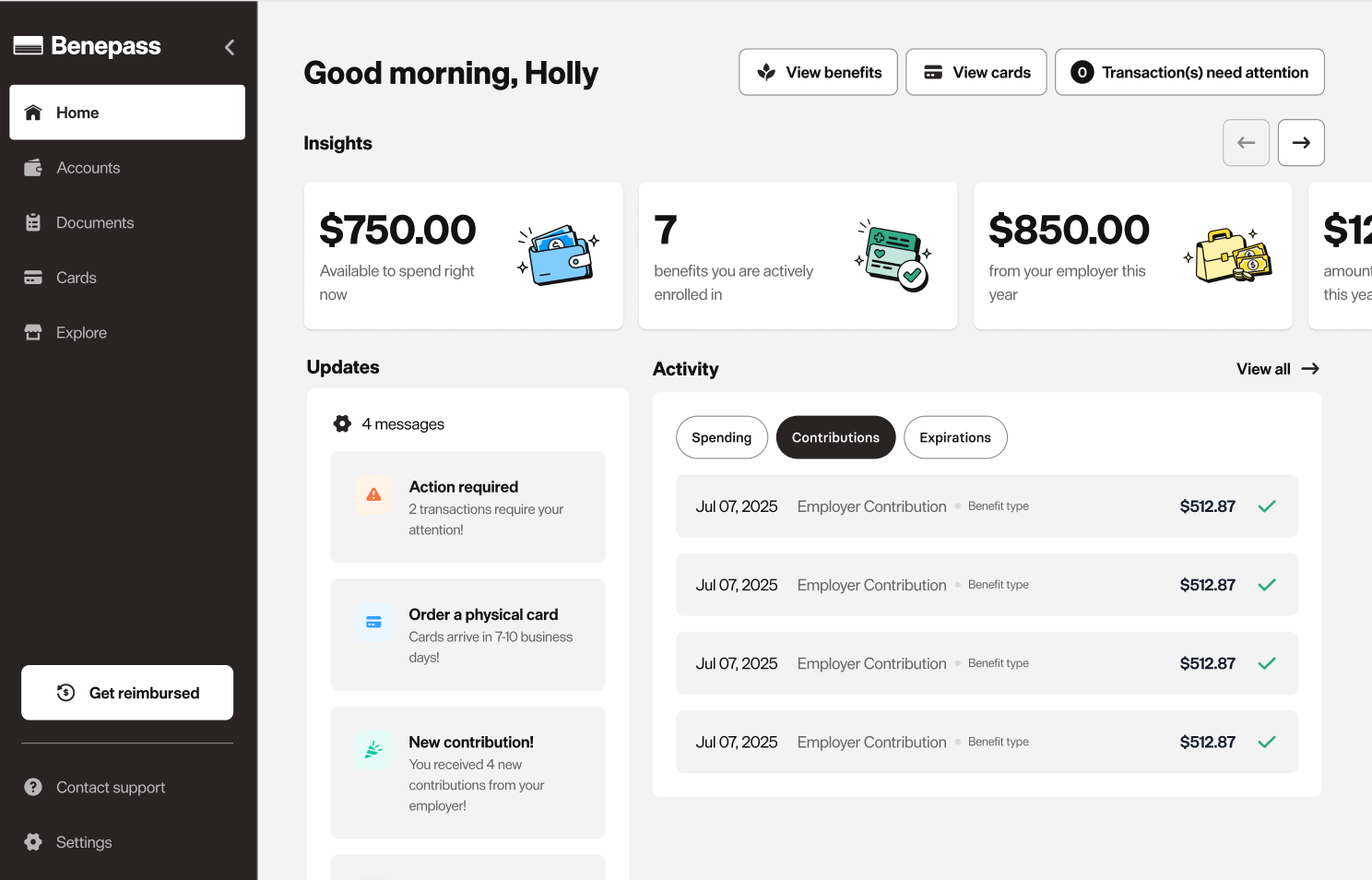
Benepass is a benefits platform built around a card-first model. Instead of paying out of pocket and waiting, employees pay for eligible expenses with their Benepass card. Employers use it to fill the gaps their health plan leaves behind, with targeted HRAs built around the needs of their workforce.
Key features:
Limitations:
Best for: Mid-market and enterprise employers that want targeted HRAs on the same platform as their HSAs, FSAs, and lifestyle spending accounts.
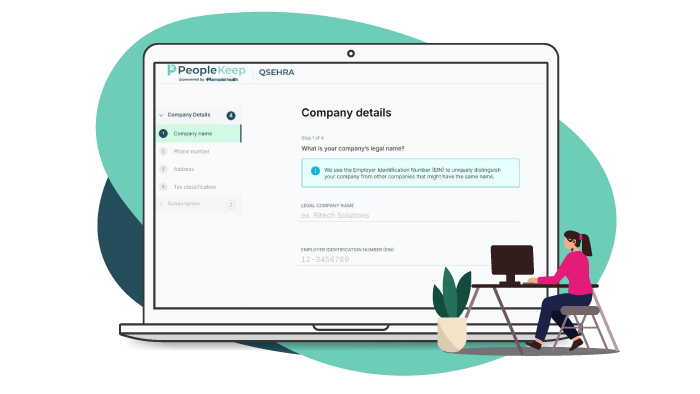
PeopleKeep is an HRA specialist with published, per-employee pricing for employers replacing or supplementing traditional group coverage.
Key features:
Limitations:
Best for: Small businesses launching a QSEHRA or ICHRA that want clear, predictable pricing.
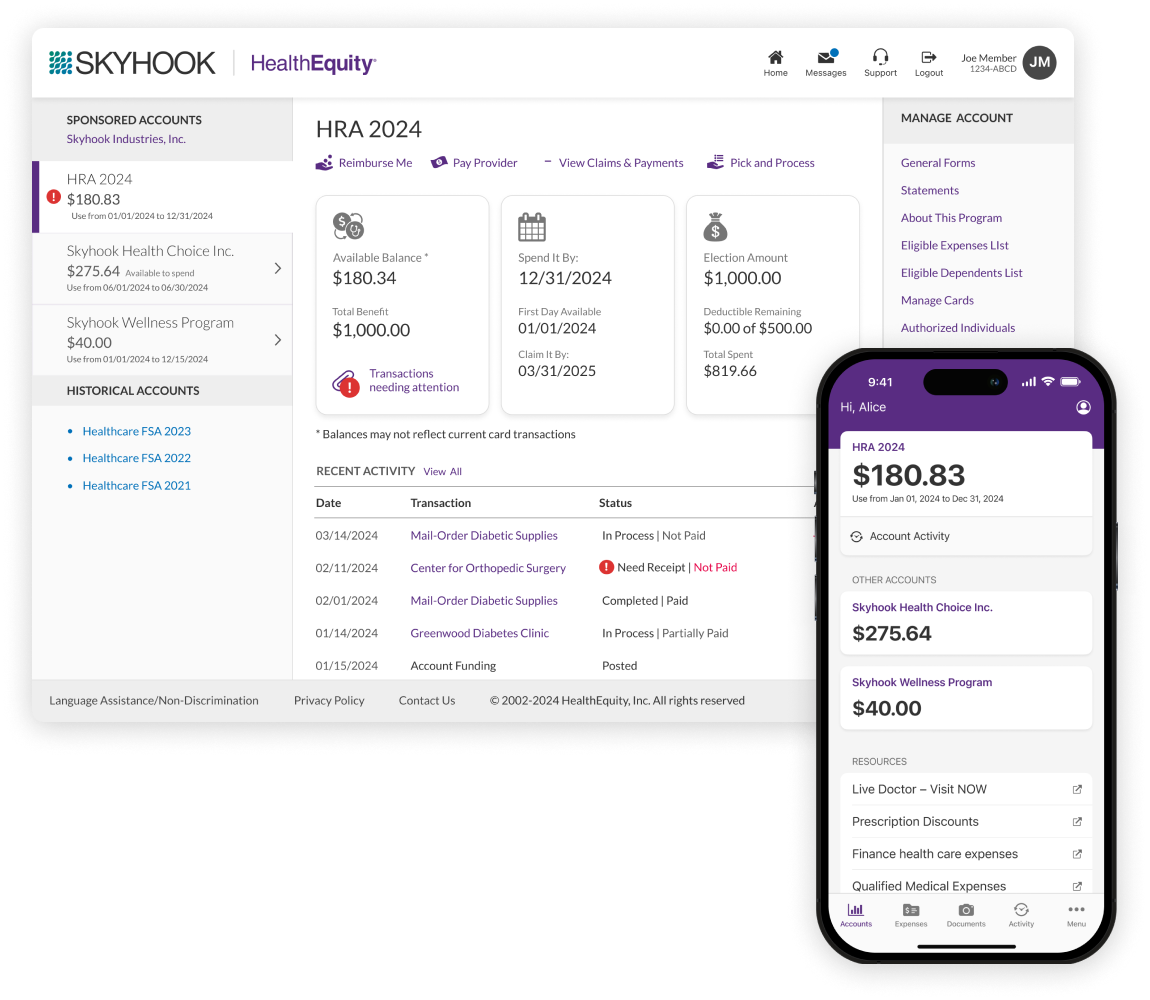
HealthEquity is a health account provider whose HRA pairs with its FSA and HSA products.
Key features:
Limitations:
Best for: Employers that already use HealthEquity for HSAs or FSAs and want to consolidate.
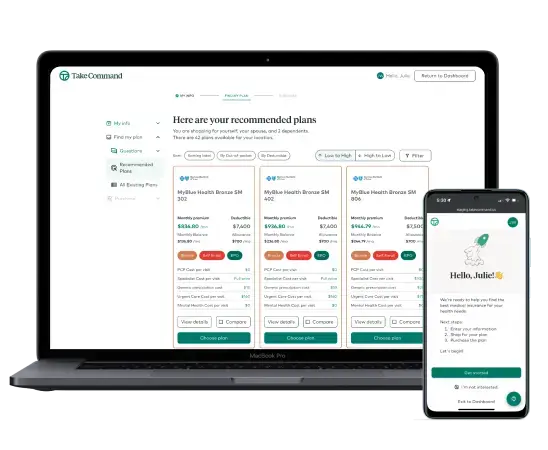
Take Command specializes in individual coverage models and puts heavy emphasis on helping employees choose a plan.
Key features:
Limitations:
Best for: Employers of any size replacing group coverage with an ICHRA.
WEX is a benefits and payments company that also works with brokers and consultants to deploy benefits accounts for their clients.
Key features:
Limitations:
Best for: Complex organizations running several HRA designs at once.

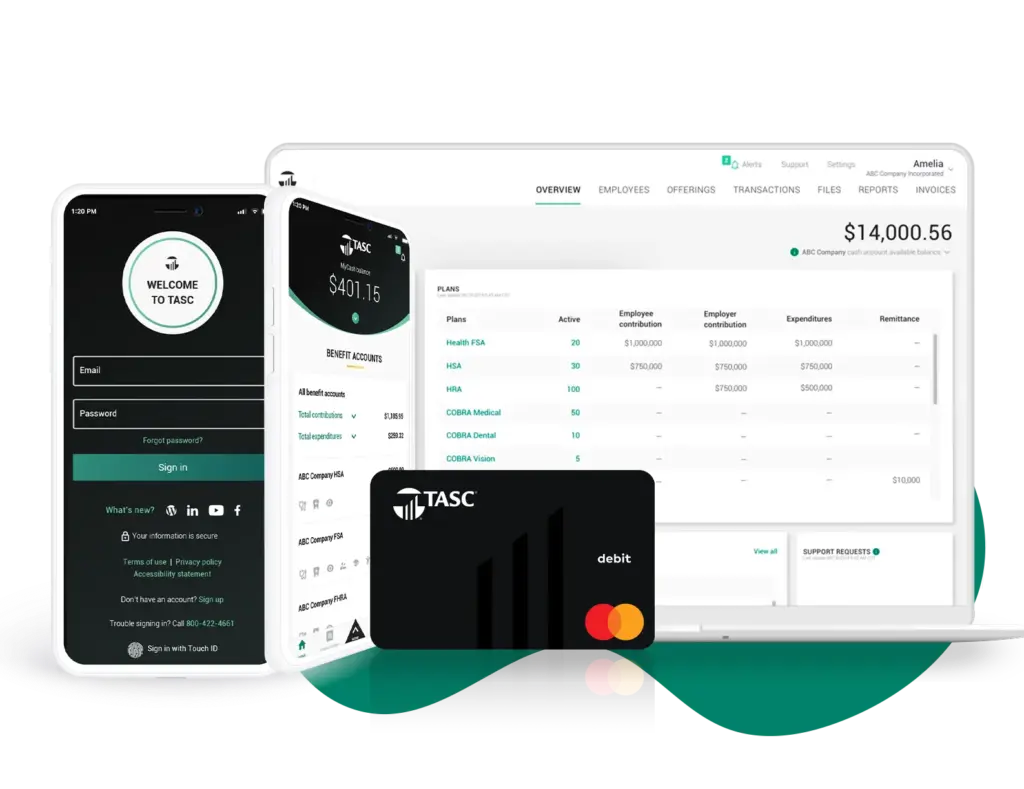
TASC offers one of the widest menus of HRA plan types, managed through its MyTASC portal and app.
Key features:
Limitations:
Best for: Employers that need unusual HRA structures, such as retiree or Medicare HRAs.
A vendor's feature list tells you what's possible. These three areas tell you how the plan will run once it's live.
Start with the plan you want, then confirm the administrator runs it well. Each type serves a different situation:
Also ask about plan design flexibility: employee classes, proration for mid-year hires, rollover rules, and targeted budgets. Budgets vary widely, so the platform should fit your number rather than force a default. According to the 2026 Benepass Benefits Benchmarking Report, Financial Services employers are the most generous, funding HRAs at a median of $9,000 a year, and several industries show wide gaps between median and average subsidies. If you're still deciding which account fits, compare an HRA vs. an HSA before you shortlist vendors.
An HRA only delivers value when employees use it. The same Benepass report found that HRA engagement averages 56%, which means more than four in 10 eligible employees aren't touching funds their employer set aside.
The payment model explains a lot of that gap. With traditional reimbursement, the employee pays, uploads a receipt, waits for review, and waits again for payment. With a card-first model, the employee pays at the point of care with employer funds. That difference matters most for big-ticket care, like specialist visits and hospital bills, where fronting the cost is a real burden.
When you demo each administrator, ask:
Compliance is a pass-or-fail test. Every reimbursed expense needs substantiation, and each HRA type carries its own rules. Card-first platforms can handle much of that automatically. Across Benepass's pre-tax accounts, card transactions at doctors' offices and hospitals were auto-substantiated 97% of the time, according to the same report, so employees didn't have to submit receipts for most of their care. For QSEHRAs, IRS Notice 2017-67 requires proof of minimum essential coverage and a written notice to eligible employees at least 90 days before the plan year, with a $50-per-employee penalty (up to $2,500 per year) for missing it.
Annual limits also change. For 2026, QSEHRA reimbursements can't exceed $6,450 for self-only coverage or $13,100 for family coverage (Rev. Proc. 2025-32). For plan years beginning in 2027, the excepted benefit HRA limit rises to $2,250 (Rev. Proc. 2026-24). The IRS hasn't yet published 2027 QSEHRA limits, so confirm your administrator updates plan documents once it does.
Narrow the field by matching three variables to your situation:
The payment model deserves the most weight. A card-first platform closes the gap between an eligible expense and getting paid, which is the gap that drives low engagement. It also cuts manual review work, a common pain point in HRA administration. Finally, check how the administrator fits with your broader benefits administration software so eligibility data flows cleanly.
The best HRA administrator is the one employees don't have to think about. A long list of supported account types looks good in an RFP, but it doesn't help the employee standing at a pharmacy counter deciding whether to pay now and chase a reimbursement later.
That's the case for a card-first approach. Benepass lets employees pay with HRA funds at the point of care, validates eligibility on your behalf, and enrolls the right people straight from payroll. Because the same platform also runs HSAs, FSAs, and pre-tax spending accounts, your HRA doesn't add another vendor or login.
Book a demo to see how a card-first HRA replaces manual reimbursement claims with tax-free spending that employees can use the moment they need care.
An HRA administrator runs the day-to-day operations of your health reimbursement arrangement. That includes enrolling eligible employees, substantiating claims, paying reimbursements or card transactions, tracking balances, and maintaining plan documents. Good administrators also keep you compliant with IRS rules, such as annual contribution limits and required notices, and provide reporting for payroll and tax purposes. The employer decides the budget and plan rules, and the administrator makes sure they're applied consistently.
Most HRA administrators charge a monthly per-employee fee, sometimes with a base or platform fee. Published pricing gives a sense of the range: PeopleKeep starts at $25 per employee per month plus a $50 base fee for QSEHRA and ICHRA, and $12 plus a $30 base fee for GCHRA. Take Command also starts at $25 per employee per month. Enterprise administrators typically quote custom pricing based on headcount, plan types, and integrations. For a broader comparison, see our HRA administration software guide.
Yes, with planning. The cleanest time to switch is at the start of a new plan year. Ask your current administrator how it'll handle the run-out period for claims incurred before the switch, and confirm how balances or carryovers transfer. Give your new administrator enough lead time to connect payroll and HRIS data, issue cards, and meet notice deadlines, such as the 90-day QSEHRA notice.
