
Back to all blog posts

Most HR teams don’t set out to run benefit packages through spreadsheets and inbox threads. It’s a time-consuming endeavor that grows until administration becomes harder to manage than the benefits themselves.
The result is predictable: You end up with manual data entry work, inconsistent figures, and more employee questions than your team can keep up with.
Benefits administration software can fix that, but not every platform solves the same problems. Some reduce manual work. Others improve the employee experience. A few give you the visibility and control needed to manage benefits at scale. The stakes are high for employers evaluating these systems. SHRM’s 2025 Employee Benefits Survey found that 88% of employers rated health-related benefits as very or extremely important, while 81% said the same about retirement savings and planning benefits.
This guide breaks down how to evaluate benefits administration software, what features matter most for benefits management, and how seven leading platforms compare so you can choose the right fit for your team.
Benefits administration software centralizes your employee benefits program, from open enrollment and qualifying life events to compliance reporting and carrier data feeds. It helps simplify the entire benefits enrollment process. Instead of managing separate vendor portals, you work from a single system that keeps data consistent across payroll systems, HRIS, and insurance carriers.
That shift shows up in a few beneficial ways. Your team spends less time fixing errors and reconciling data. Compliance tasks like ACA and COBRA are easier to manage. And employees are more likely to use their benefits when they can access them without confusion or delays.
Further, employer-sponsored coverage is still a core part of compensation. In March 2024, 72% of private industry workers had medical care benefits, according to the U.S. Bureau of Labor Statistics.
Choosing the wrong platform creates more work and can complicate your overall benefits process. It leads to manual workarounds, data errors, and employees who rely on HR to access their benefits. A structured evaluation process helps you avoid those issues and build a clear recommendation for leadership.
You can make your evaluation in the following steps:
Use these criteria to evaluate the platform’s key features and weigh them based on your organization's priorities:
During demos, ask vendors about real scenarios your team faces: how they handle mid-year plan changes for employees who relocate, or what happens when an employee disputes a declined expense. The quality of those answers tells you more than any feature checklist.
Each of these platforms takes a different approach to benefits administration. The right choice depends on your company’s size, how your programs are structured, and how your current systems operate.
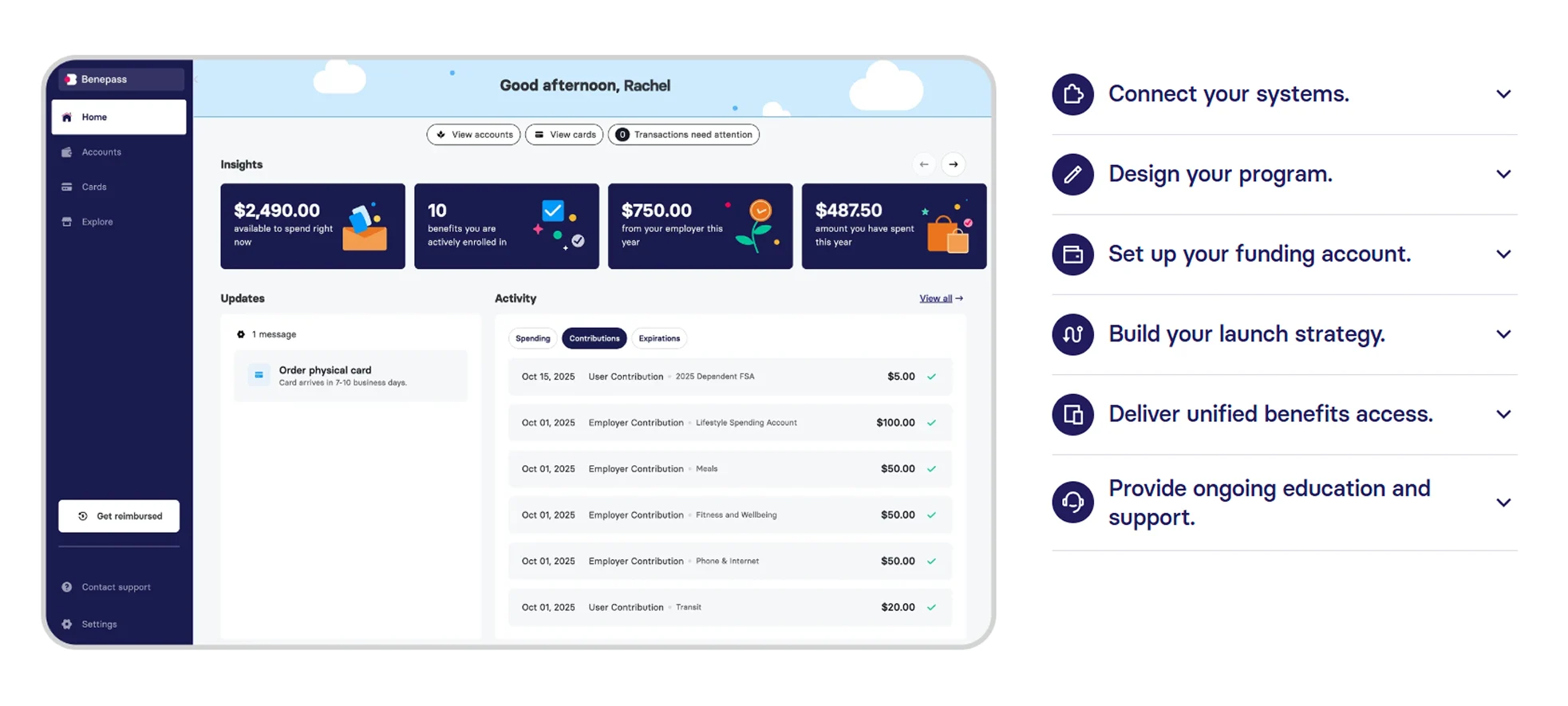
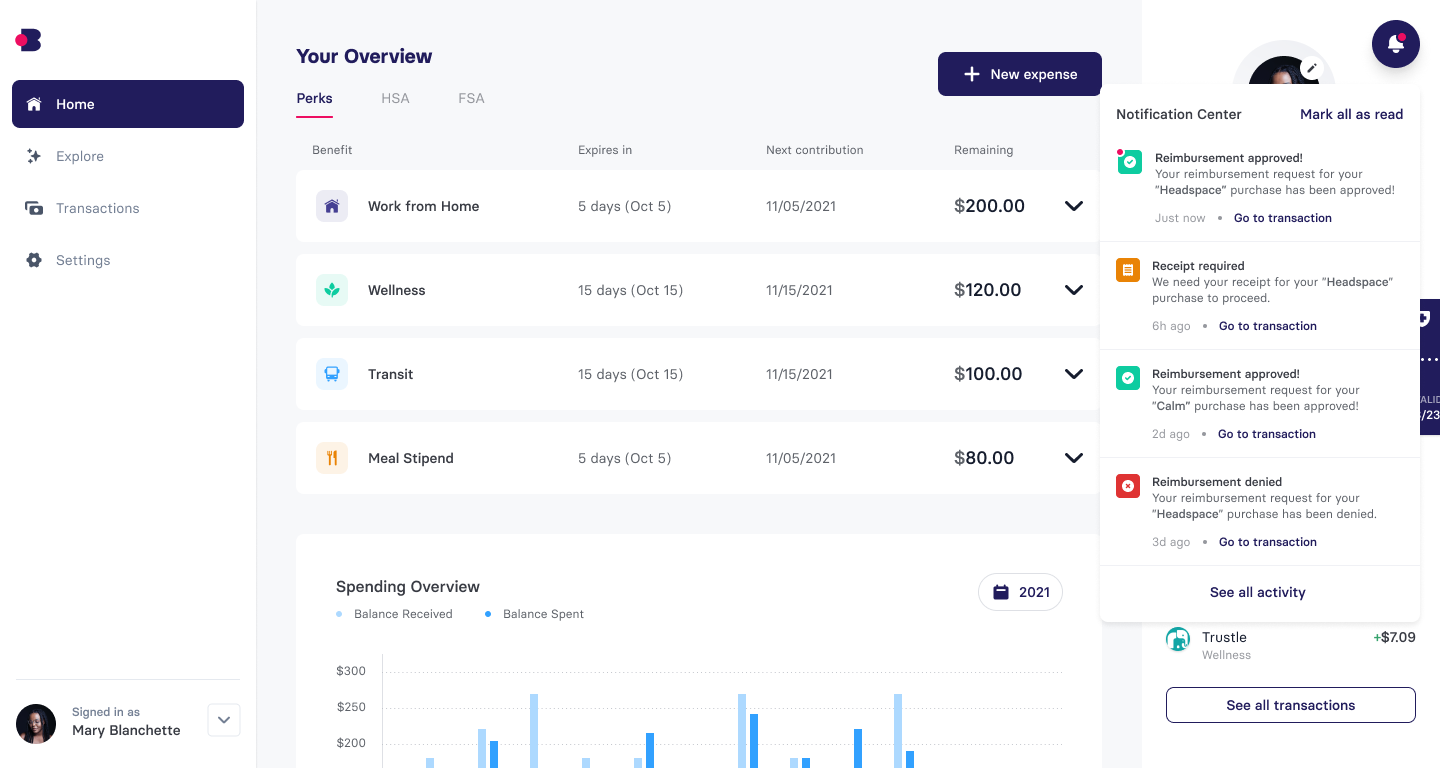
Benepass is a user-friendly specialist benefits platform that centralizes pre-tax benefits and post-tax perks in a single system.
Unlike payroll platforms that added benefits as an afterthought, Benepass was built to support a wide range of modern benefits programs, including:
One standout feature is its card-first approach, which helps reduce the reimbursement bottleneck that can limit engagement in traditional programs. Employees receive a pre-loaded Benepass Visa card that automatically enforces policy rules at the point of purchase, so they can pay for eligible expenses without submitting receipts or waiting for approval.
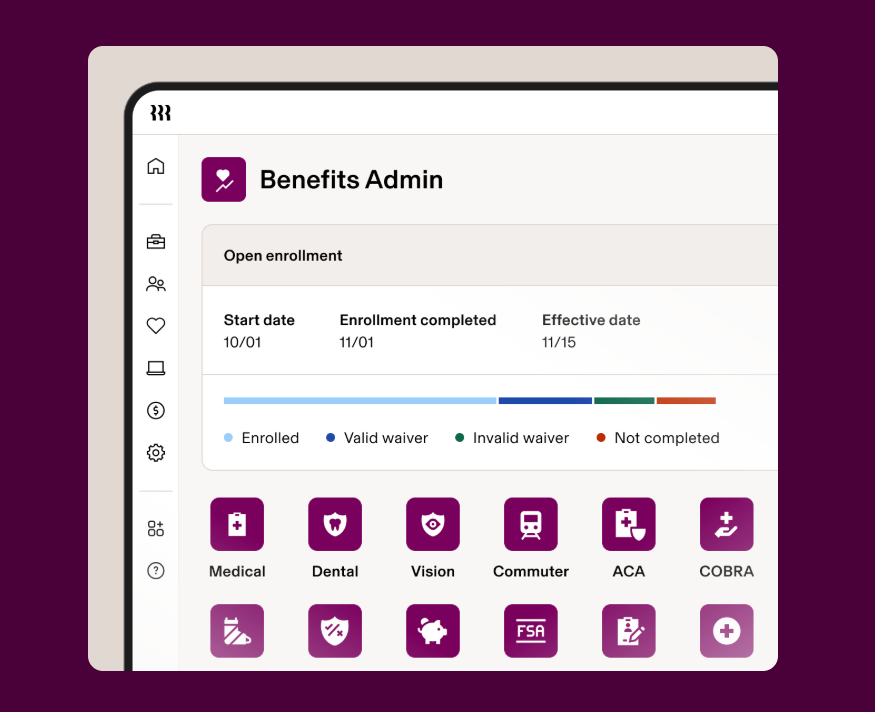
Rippling is a unified HR and IT platform that connects payroll, benefits, device management, and mobile app provisioning through a single employee data model. For organizations already using Rippling for payroll, the benefits module syncs enrollment changes directly with payroll deductions and automatically updates eligibility when employees experience life events.
The platform supports benefits administration for programs such as:
Its primary strength is that updating an employee record in one place flows across connected systems automatically, which can improve benefits management for teams managing benefits across multiple carriers.
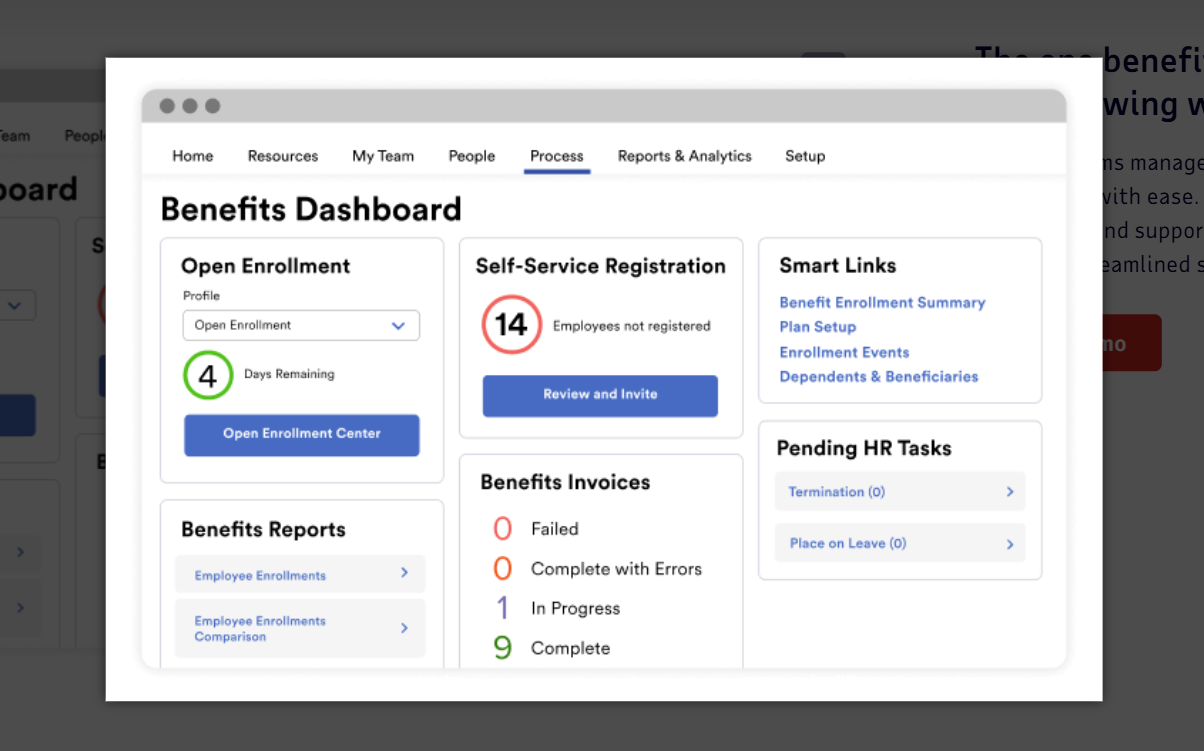
ADP Workforce Now is an enterprise-grade HCM platform built for organizations managing complex, multi-state benefits programs at scale.
The platform’s benefits administration strengths include:
That benchmarking capability can help employers compare benefits, costs, and employee enrollment patterns against anonymized industry data, which is a differentiator for larger organizations. The tradeoff is complexity, since pricing is customized and the platform’s enterprise focus can create a steeper learning curve for smaller HR teams.
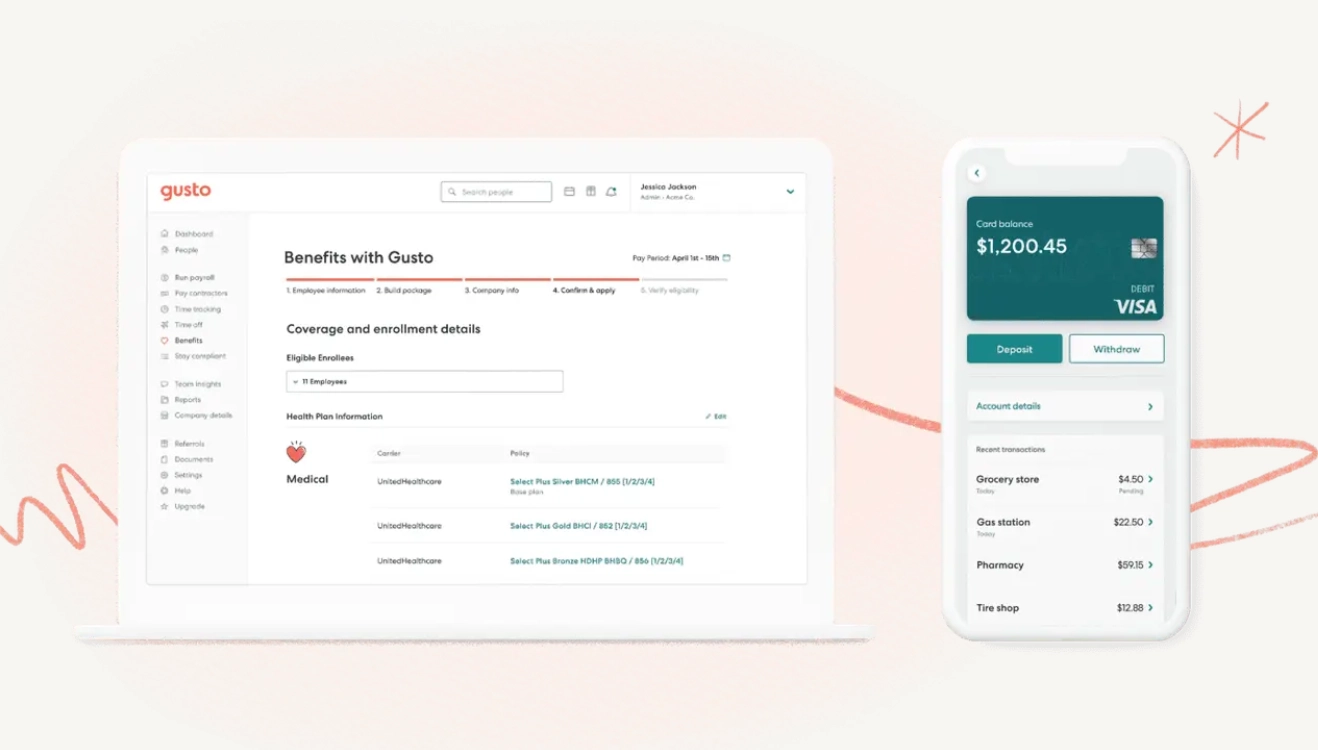
Gusto is a payroll and HR platform designed primarily for small to mid-sized businesses that want to consolidate payroll, compliance, and benefits in one system.
It supports benefits administration for offerings such as:
Gusto also highlights ACA reporting, HIPAA, and COBRA administration as included within its benefits administration offering. The platform works well for straightforward benefits programs, particularly if you are already using Gusto for payroll and want to reduce vendor count.
Pricing on Gusto’s official pricing page is currently listed at $49 per month plus $6 per person for the Simple plan and $80 per month plus $12 per person for the Plus plan. Outside of payroll admin, which is included, most employee benefits are available as an add-on.
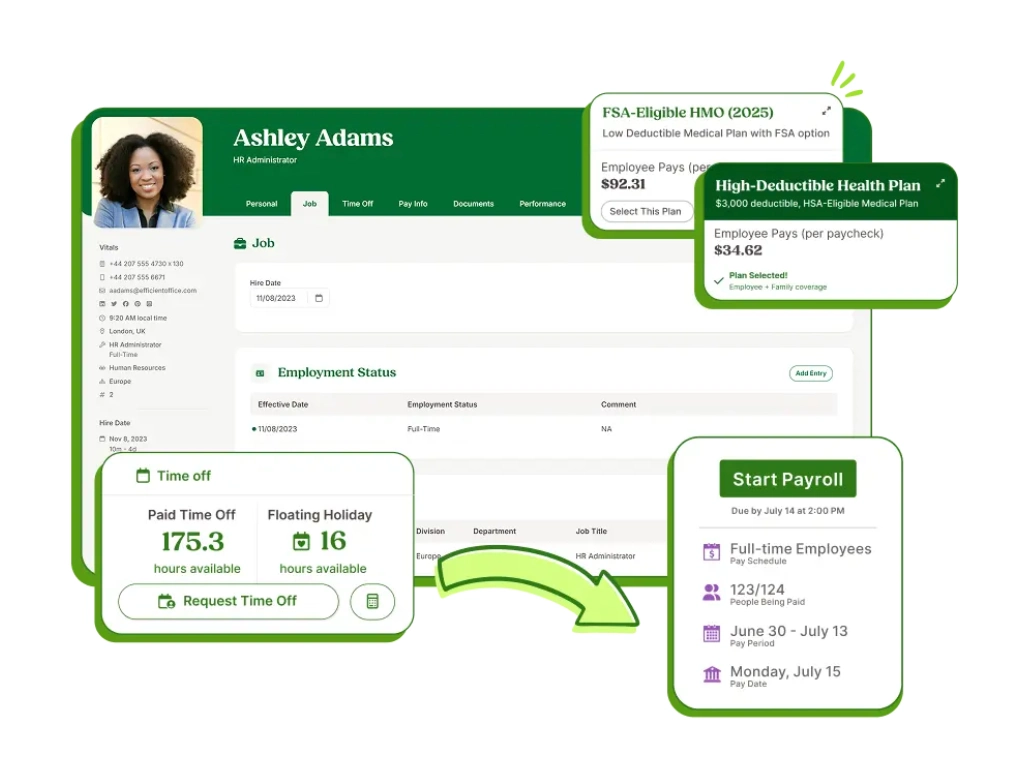
BambooHR is a cloud-based HRIS that offers a Benefits Administration module alongside its core HR management features.
Its benefits administration capabilities include:
For organizations already using BambooHR for core HR functions, the benefits module extends the platform without requiring a separate vendor relationship. Benefits Administration is an add-on module, and pricing is available by quote.
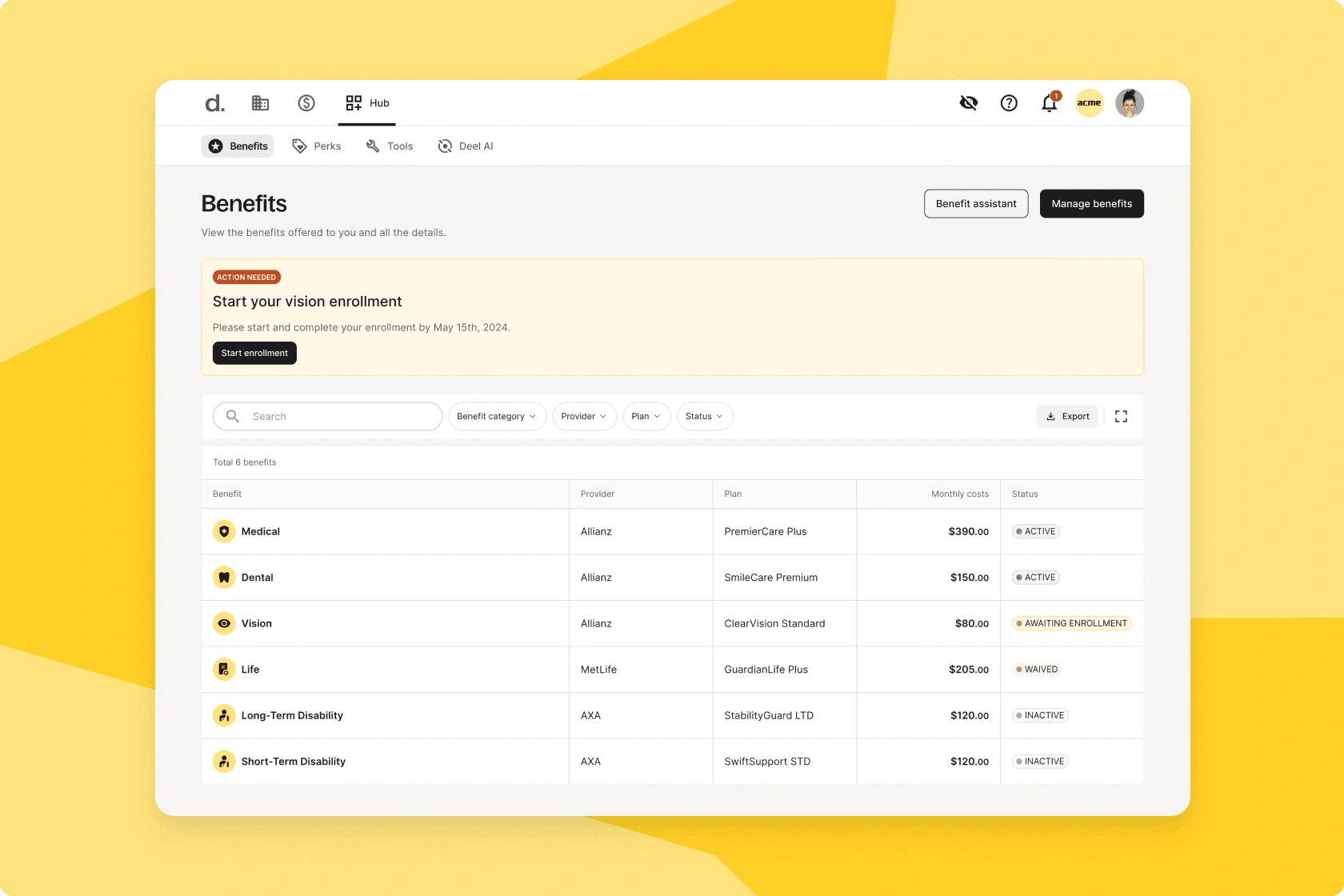
Deel is a global HR platform that combines payroll, compliance, and benefits administration for distributed teams.
Its benefits-related strengths include:
Its capabilities are especially relevant for companies with international employees who need localized packages and centralized administration in a single dashboard. For US-based employees, Deel also markets access to localized benefits within its platform. The platform is best suited to organizations already using Deel Payroll or EOR services. Deel’s Employer of Record pricing starts at $599 per employee per month.
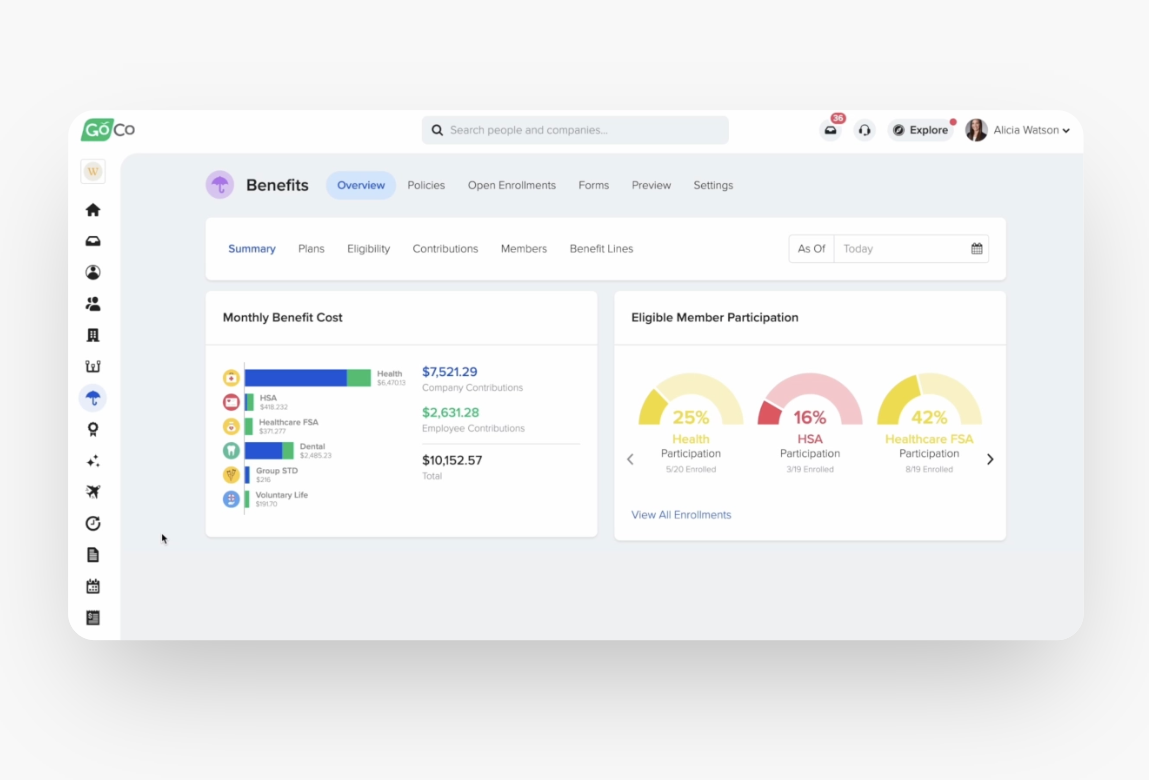
GoCo is an all-in-one HR platform that was acquired by Intuit in 2025. It combines benefits administration with onboarding, payroll, and compliance tools.
Its benefits administration capabilities include:
GoCo works well for teams seeking to consolidate HR, payroll, and benefits into a single system.
Selecting the right platform is only half the work. Adoption depends on how you roll it out, which you can do in seven steps:
Most benefits teams face the same issues: too many systems, too much manual work, and low employee engagement.
Benepass addresses this by bringing pre-tax benefits and post-tax programs into a single system. Your team manages everything in one place rather than reconciling data across multiple vendors.
Employees get a single card they can use at the point of purchase, with eligibility rules applied automatically. That removes the reimbursement process and makes benefits easier to use day to day.
For your team, that means:
Teams also use Benepass to launch flexible programs without adding new vendors. For example, companies can offer lifestyle spending accounts that cover categories like fitness, mental health, and professional development, all within the same system.
Schedule a demo to walk through the platform, review reporting, and understand what implementation would look like for your team.
