
Back to all blog posts

Most HR leaders can tell finance exactly what the company spent on benefits last year. Fewer can say what that spend actually returned. Proving employee benefits ROI means pulling hard-dollar savings together with retention, engagement, and utilization data across your whole program, then presenting it in terms leadership will accept.
This guide breaks down what employee benefits ROI actually means, how to calculate it, and what to do when the numbers come up short.
Employee benefits ROI (return on investment) is the financial and organizational return a company gets from what it spends on its employee benefits package. It splits into two categories.
Hard ROI covers quantifiable cost savings: reduced healthcare claims, lower turnover costs, tax savings from pre-tax accounts, and reduced administrative spend. These numbers translate directly into dollars finance can verify.
Soft ROI covers the harder-to-quantify but still measurable impact on employee retention, employee engagement, and productivity. A benefits program that keeps employees longer, supports employee well-being and work-life balance, and reduces absenteeism and presenteeism produces real value, even when that value takes more work to isolate.
ROI conversations often stall before they start, and usually for the same reason: benefits spend is spread across disconnected vendors. When a wellness stipend, retirement plans, a tuition reimbursement program, a recognition platform, and a commuter benefit each report through separate dashboards, it becomes difficult to say with confidence what is actually driving returns and what is quietly dragging them down.
The standard formula is straightforward: ROI equals the gain from a program minus its cost, divided by that cost. The harder part is gathering accurate inputs on both sides of that equation.
Start with what a program costs: platform fees, per-employee charges, administrative hours, and the face value of funds distributed. Then quantify the gain side.
Soft ROI still needs numbers behind it, even if those numbers come from a different kind of data.
Employee financial wellness programs offer a clear example: pulse survey results on financial stress and burnout, job satisfaction scores, program enrollment within the first 90 days, and self-reported confidence scores all give you a defensible way to track impact that never shows up on an invoice.
Participation and utilization rates matter here too, since a stipend nobody touches cannot produce soft ROI any more than it produces hard ROI. Track both sides of that ledger the same way you would a hard-dollar input, on a set cadence, not as an afterthought at renewal.
You cannot show improvement without knowing your starting point. Before running any ROI calculation, document your current benefits spend by category, current utilization rates for each program, retention rates and absenteeism rates by department, your trailing 12-month voluntary turnover rate, and your average time to fill open roles.
This baseline becomes the number every future ROI conversation gets measured against, so it's worth getting it right the first time rather than reconstructing it later from memory.
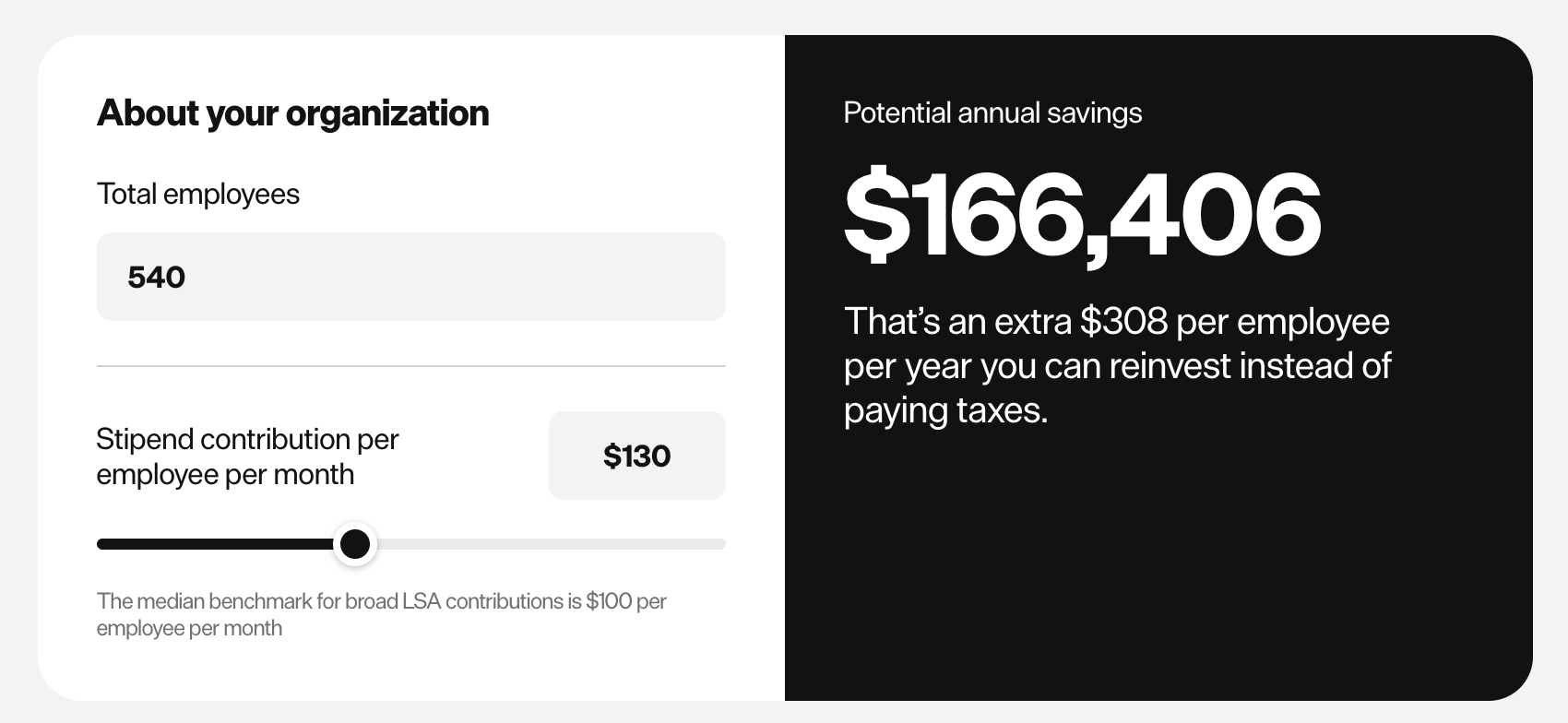
Even a generous benefits budget can produce weak ROI, and the failure points are usually predictable.
Low utilization is the most common drag on returns. A stipend nobody uses delivers zero return regardless of how well it was designed, and utilization tends to drop further when employees have to navigate multiple logins, apps, or reimbursement processes just to spend what they were given.
Redundant point solutions compound the problem. According to PwC's Employer Benefits Perspective Survey, 25% of employers now work with more than 20 vendors across their health and wellness benefits portfolio. This is especially common with employee wellness programs, where a fitness stipend, a mental health app, and a recognition tool often duplicate what a single lifestyle spending account could cover.
Benefits chosen without employee input round out the list. Programs designed around what leadership assumes employees want, rather than what employees actually value, tend to see the lowest voluntary participation of all, and can quietly dent employee morale when workers feel unheard.
Underused stipends and disconnected wellness vendors are frequently the biggest hidden drag on ROI, and consolidating them onto one platform is often the fastest way to recover value without adding budget. A lifestyle spending account that replaces several standalone point solutions gives employees one place to spend and gives HR one dashboard to measure results, instead of stitching together reports from five different vendors at renewal time.
Once you know where ROI is falling short, the fix is less about adding new benefits and more about getting more value from what you already offer, value that shows up in improving productivity and in your ability to attract and retain top talent, not just in the budget line.
You cannot tell whether your ROI is good or bad without a comparison point. Benchmarking your program against similar-sized employers in your industry shows whether your utilization, spend per employee, and participation rates are ahead of or behind the curve.
The market context matters here too. WTW's 2025 Benefits Trends Survey found that 63% of employers plan to reallocate or rebalance their benefits spend over the next three years, up from just 8% the year before. If your organization hasn't benchmarked recently, it's likely behind that shift rather than ahead of it.
Once you have benchmark data, redirect budget away from the programs producing the weakest returns. That often means cutting a rarely used vendor or wellness initiative and reallocating that budget toward a program with proven utilization, rather than adding a new line item on top of an already crowded stack.
According to the 2026 Benepass Benefits Benchmarking Report, lifestyle spending accounts see 83% average utilization, well above what most single-purpose point solutions report. That gap alone makes a strong case for consolidating underperforming programs into a more flexible format.
The same report found that employers offering both an FSA and an LSA see FSA utilization climb to 85%, compared to 79% for employers running an FSA on its own. Once employees are actively engaging with a flexible account, they tend to pay closer attention to their pre-tax elections too, which is the kind of compounding return that is easy to miss when programs are evaluated one at a time.
A program only produces ROI if employees know it exists and understand how to use it. Regular reminders tied to real moments, like open enrollment, onboarding, or a life event that changes what someone needs, do more for utilization than a single announcement email ever will.
Visibility works both directions. Employees need to see what's available to them, and HR needs real-time reporting on what's actually being spent and where, rather than waiting for a quarterly export to find out a program is underperforming. That real-time view is also what turns a benefits program from a fixed annual decision into something you can adjust mid-year, before a weak program has a chance to drag down the whole year's ROI numbers.
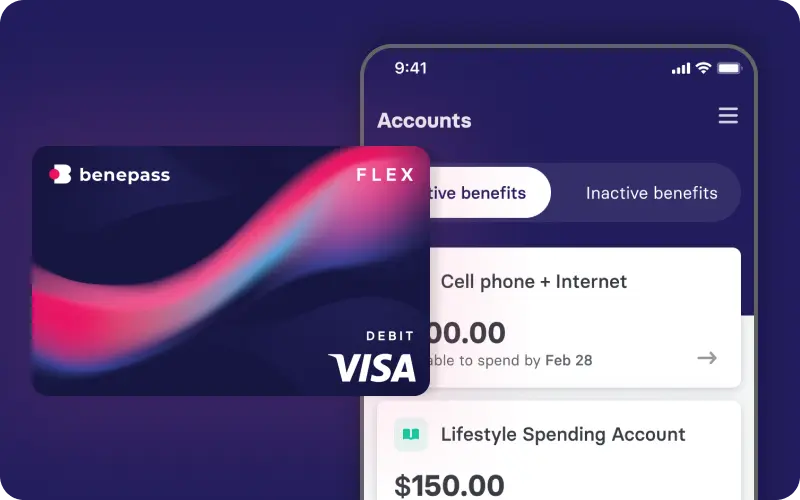
Treating benefits as a strategic investment rather than a fixed cost is what makes this whole exercise worth doing. At its foundation, weak employee benefits ROI is usually a visibility and consolidation problem, not a benefits design problem. The programs themselves are often reasonable, but a disjointed experience shapes company culture and business performance whether HR intends it to or not. What is missing is a clear, current view of what each one costs, who uses it, and what it returns.
Leadership doesn't need a perfect number. They need a defensible one: a baseline, a formula applied consistently, and a plan for the programs that aren't pulling their weight. HR leaders who can walk into a budget conversation with that story, backed by numbers instead of assumptions, are the ones who win the argument for keeping and expanding programs that work.
If you're working to consolidate underused point solutions and show leadership exactly where benefits dollars go, book a demo to see how Benepass turns fragmented benefits spend into one platform with clear reporting on utilization and return.
There is no universal benchmark, since it depends on program type, cost, and what you count as a return. A good ROI shows that the combined value of hard savings (tax benefits, reduced turnover costs, lower claims) and soft gains (engagement, retention, employee satisfaction, and productivity) exceeds what the program costs to run with a clear trend of improvement year over year.
Review utilization and spend data monthly or quarterly so problems surface early, and run a full ROI calculation at least once a year ahead of budget planning. Programs going through a major change, like a new platform or a redesigned stipend, are worth reviewing more frequently during the first year.
Hard ROI covers quantifiable financial returns, like tax savings, reduced claims, and lower turnover costs, that can be verified against actual dollars. Soft ROI covers harder-to-isolate but still measurable outcomes, like engagement, retention, and productivity, that require survey data or HR metrics rather than an invoice.
