
Back to all blog posts

When an HR team starts researching Xoxoday alternatives, or Xoxoday competitors, it's usually because one of three things has happened: the catalog-and-points redemption model feels impersonal, the quote-based pricing is hard to defend at renewal, or recognition has become one more disconnected vendor in an already crowded benefits stack.
Whatever the trigger, the decision ahead is bigger than picking a new vendor: whether to stay with Xoxoday, switch to another standalone recognition tool, or consolidate recognition with the rest of your benefits program.
This guide compares the leading Xoxoday alternatives, walks through the criteria that matter most for HR teams, and gives you a framework for building the case to switch.
According to the 2026 Benepass Benefits Benchmarking Report, rewards and recognition is now the fastest-growing lifestyle spending account category, with nearly 20% of employers offering it, up from 7% the year before. That growth is pulling more HR teams into exactly this kind of comparison. Here's how the top Xoxoday alternatives stack up on redemption model, integration depth, program flexibility, and pricing.
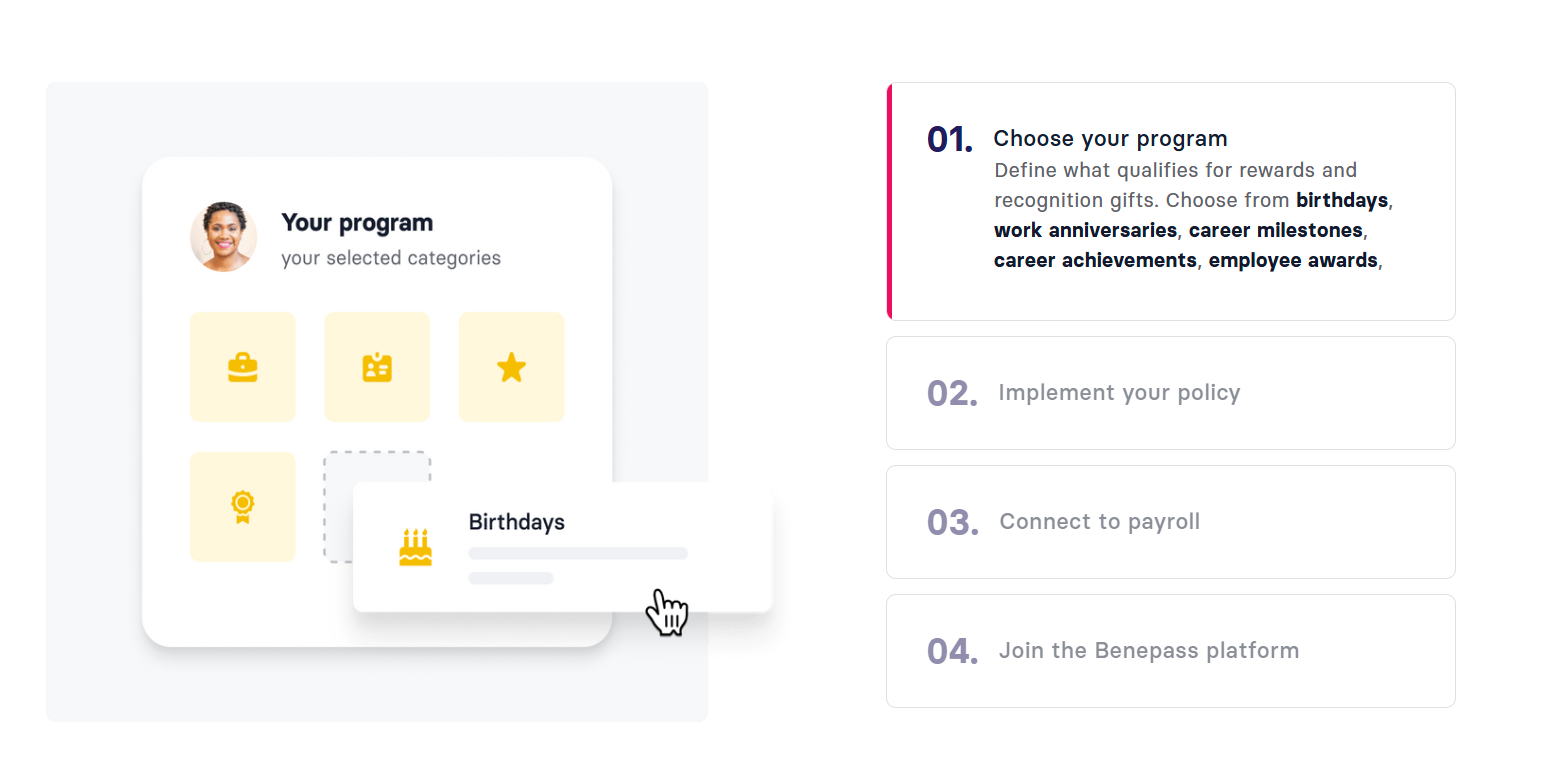
Best for: HR teams that want recognition funded on the same card and platform as pre-tax and lifestyle benefits.
Overview: Benepass Rewards and Recognition funds birthdays, work anniversaries, and performance milestones on the same Visa Benecard employees already use for HSAs, FSAs, commuter benefits, and other lifestyle spending accounts. Because the accounts are notional, dollars only move when an employee makes an eligible purchase, and program rules apply automatically at the point of sale rather than through a separate claims process.
Key strengths:
What to consider: Best suited for teams that want recognition folded into a broader benefits platform, not run as a standalone point solution.
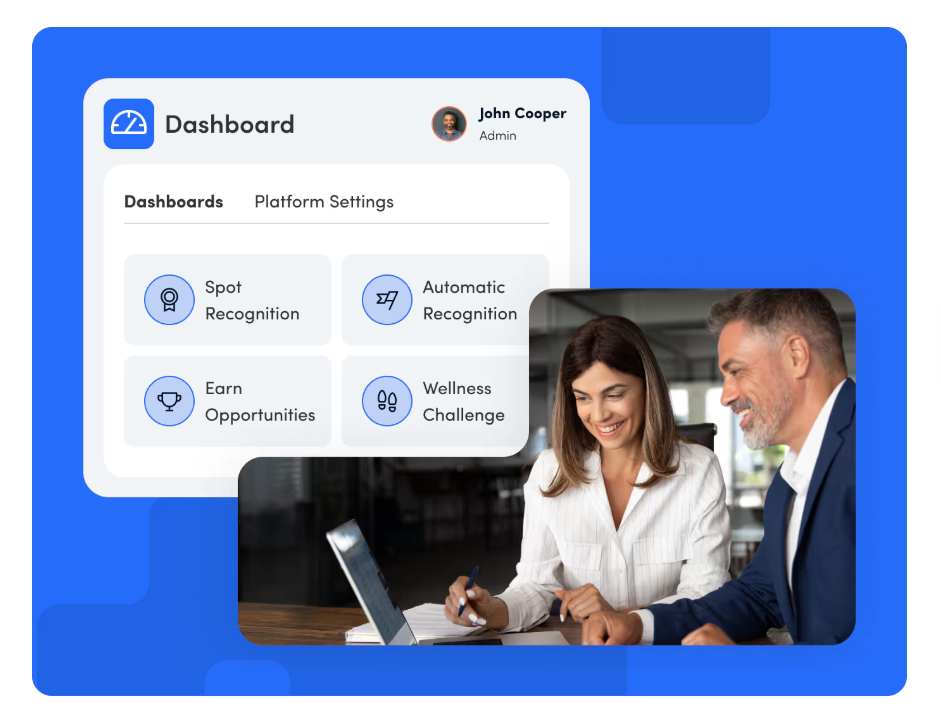
Best for: Enterprises that want a highly configurable, points-based recognition and engagement program.
Overview: Awardco combines recognition, rewards, and engagement in a single system, with a large reward network and configurable point budgets that can be set by department, role, geography, or business objective.
Key strengths:
What to consider: Pricing is quote-based with no public rate card, and the platform runs independently of pre-tax or lifestyle benefit accounts.
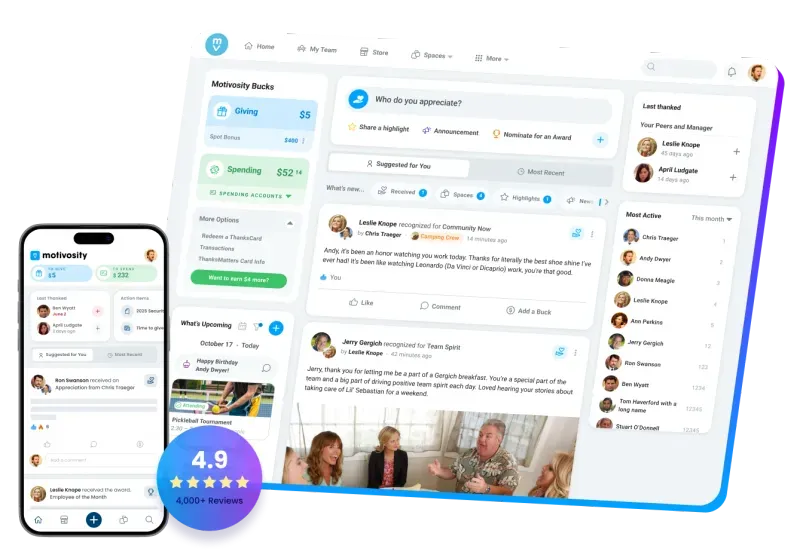
Best for: Mid-sized teams that want peer-to-peer recognition tied directly to company values.
Overview: Motivosity centers its platform on peer recognition, letting employees acknowledge each other's contributions in the flow of work rather than relying only on manager-driven programs.
Key strengths:
What to consider: Motivosity has added Lifestyle Spending Accounts alongside recognition, but it doesn't administer pre-tax accounts like HSAs or FSAs, so pre-tax benefits still run through a separate vendor.
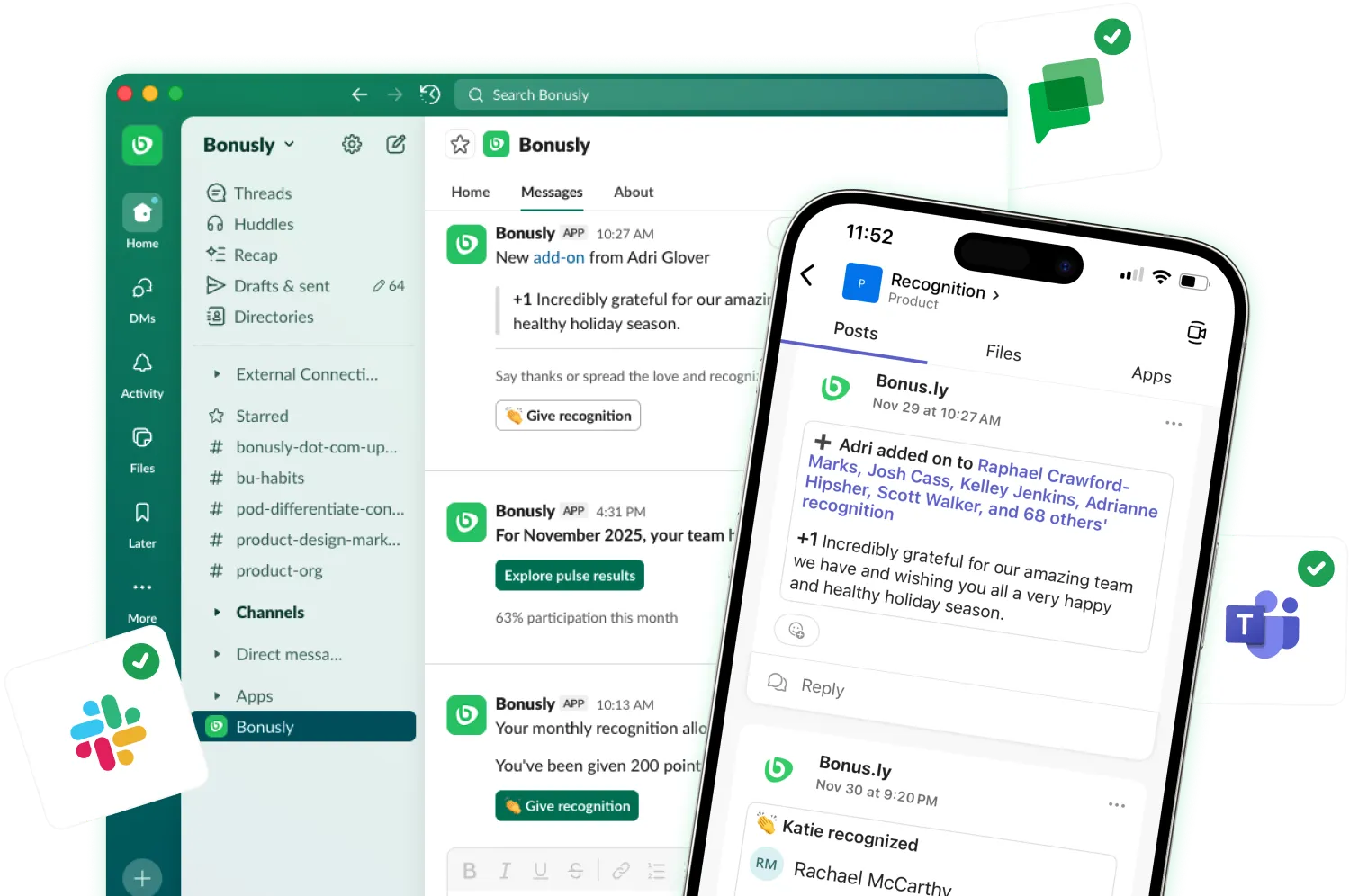
Best for: Teams that want a lightweight, points-based recognition tool built into daily communication tools.
Overview: Bonusly gives every employee a set number of points to distribute as recognition, redeemable through a catalog of hundreds of gift cards, prepaid cards, curated gifts, and cash options.
Key strengths:
What to consider: Redemption runs through a points catalog rather than direct card spend, which can be slower than immediate, funded access.
Best for: Global organizations that want recognition bundled with wellness, perks, and survey tools.
Overview: Vantage Circle is an AI-enabled engagement platform built around four connected products: Vantage Rewards for recognition, Vantage Pulse for surveys, Vantage Perks for discounts, and Vantage Fit for wellness.
Key strengths:
What to consider: The broader four-product suite can add complexity for teams that only need a recognition tool, not a full employee engagement platform.
Xoxoday is an employee engagement, rewards, and incentives platform best known for two products: Empuls, which combines employee engagement with built-in recognition and rewards, and Plum, a global rewards marketplace. Empuls uses a per-employee, per-month pricing model based on workforce size and selected modules. Xoxoday does not publish standard dollar amounts on its pricing page.
On paper, Xoxoday performs well. It’s rated 4.6/5 across over 1,500 reviews on G2. In practice, though, a handful of recurring friction points show up in that same review data: delays between redeeming points and receiving vouchers, limited direct bank transfer options in some markets, and occasional currency conversion fees on international redemptions.
Those friction points, combined with a catalog-and-points redemption model that can feel impersonal and enterprise pricing that's hard to benchmark against a fixed rate card, are the most common reasons HR teams start evaluating alternatives. Add in that recognition often lives on its own contract, separate from the rest of the benefits stack, and it's easy to see why more teams are asking whether a dedicated recognition vendor is still the right structure at all.
Search results for Xoxoday alternatives often turn up smaller, single-purpose tools like Guusto, Tremendous, Giftbit, and Tango. Most of these center on digital gift cards and points-based catalogs rather than consolidating recognition with the rest of a benefits stack, which is a different tradeoff than the platform-level comparisons in this guide.
Once you've decided to look elsewhere, the evaluation criteria matter more than the vendor list. Use these four areas to compare employee recognition and rewards platforms on equal footing, whether you're comparing single-purpose tools or a broader digital rewards platform.
How employees actually receive and use their reward matters as much as the reward itself. Card-based models like Benepass post funds directly to a card employees already carry, while catalog-and-points models like Xoxoday, Bonusly, and Vantage Circle require employees to browse and redeem from a fixed marketplace.
Neither approach is wrong, but they create very different employee experiences and different administrative loads for your team. That gap shows up in the numbers, too. According to the 2026 Benepass Benefits Benchmarking Report, Rewards and Recognition has 82% median utilization when funded through an LSA, trailing only Entertainment and Broad LSA among all LSA categories. Funded, card-based access tends to convert into real spend instead of unused points sitting in a catalog.
A recognition platform that doesn't connect to payroll or your HRIS creates manual enrollment work every time someone joins, leaves, or changes roles. Platforms like Benepass and Awardco connect directly to payroll to automate enrollment, while standalone tools may require more manual list management, especially at scale.
It's also worth asking how each platform surfaces data. Some offer real-time analytics on redemption and spend inside the platform, while others limit you to static exports that require your own data analytics work to turn into a usable report.
Some organizations want employees to recognize each other in the moment. Others need structured, manager-driven programs tied to formal milestones like tenure or performance reviews. Motivosity and Bonusly lean heavily into peer-to-peer recognition, while Benepass and Awardco support both peer-driven and structured, milestone-based programs side by side.
Quote-based pricing makes it difficult to benchmark your program against what peer companies are paying. Ask any vendor you're evaluating for a clear breakdown of platform fees, per-employee costs, and any charges tied to redemption or card issuance before you sign a renewal.
The right fit depends less on feature checklists and more on how your organization already thinks about benefits.
If you want recognition to stay a standalone program with its own dedicated tools, a focused platform like Motivosity or Bonusly gives you deep peer-to-peer functionality without touching the rest of your benefits stack. If you're a larger enterprise that wants heavy configurability and a built-in feedback layer, Awardco's point-budget model and Engage feature offer more structure.
If your organization already uses (or wants to move toward) a card-based lifestyle spending account model, a consolidated platform like Benepass lets you fold recognition into the same system and card your team uses for other benefits, rather than adding a new point solution.
Company size matters here, too. Smaller teams often get more value from a simpler, single-purpose tool, while mid-market and enterprise organizations tend to benefit more from consolidation, since they're the ones managing the largest number of vendor contracts and renewal cycles.
Getting budget approval for a platform switch means showing your finance and leadership team the cost of staying put, not just the features of the new tool.
Start with vendor cost and admin time. PwC's Employer Benefits Perspective Survey found that 25% of employers work with more than 20 vendors across their health and wellness benefits portfolio, and every additional vendor adds its own contract, support relationship, and reporting format that your team has to manage. Quantify how many hours your team spends each month on manual enrollment, reporting, or vendor coordination tied to your current recognition tool, and multiply that by a fully loaded hourly rate.
Next, connect recognition to retention. Gallup and Workhuman research tracking nearly 3,500 employees over two years found that well-recognized employees were 45% less likely to have changed organizations. Pair that with your own turnover and replacement costs to project the retention impact of a more consistent, personalized recognition program.
Finally, show the consolidation math. If switching to a platform like Benepass lets you retire a standalone recognition vendor, count that as a direct reduction in vendor count and total benefits spend, not just a feature upgrade.
If you're comparing employee rewards and recognition platforms and want fewer vendors, less manual administration, and a single card employees already use, book a demo to see how Benepass Rewards and Recognition brings recognition together with the rest of your benefits program on one platform.
Xoxoday does not publish standard prices for Empuls. Instead, it uses a per-employee, per-month model based on workforce size and the modules selected. Competitors also use different pricing structures, so request itemized quotes that account for platform fees, implementation, integrations, and reward redemption costs.
Yes. Platforms like Benepass fund recognition on the same card and system used for pre-tax accounts and lifestyle spending accounts, so employees access rewards alongside their other benefits instead of through a separate login and vendor relationship.
Timelines vary by platform and program complexity, but most switches involve exporting historical recognition data, mapping your current program rules to the new platform, and running a short pilot with one team before a full rollout. Card-based platforms typically add card issuance and activation to that timeline.
