
Back to all blog posts

A benefits decision is far easier to defend to leadership when you can point to a comparable employer who made the same move and saw it pay off. That is what makes case studies worth reading. Employers like Anthropic, Notion, Okta, Hims & Hers, OpenAI, and Workday all run benefits programs that have to work across distributed teams, multiple entities, or fast headcount growth, and each has chosen Benepass to manage that complexity.
These three employee benefits case studies go further than a logo bar. Each one covers a real company's challenge, what it changed, and the measurable outcome that followed, so you can see what worked before you decide what to try next.
A good case study gives HR leaders weighing health benefits, lifestyle accounts, and other programs something a benefits brochure cannot: proof. It shows the design choices a company made, how it rolled those choices out to employees, and the outcomes that followed, all of which can be benchmarked against your own program. That is different from reading about a feature in the abstract. You get to see the before, the change, and the after.
The strongest case studies share one trait. They report specific results such as utilization rates, time saved, or claims outcomes, not just a general sense that things improved. If a case study cannot point to a number, it is a testimonial, not evidence. Our guide to employee benefits benchmarking covers how to build that kind of measurement into your own program.
Utilization is one of the clearest numbers to watch. According to the 2026 Benepass Benefits Benchmarking Report, lifestyle spending accounts see an average utilization rate of 83% across employer programs, a useful bar for judging whether a benefit is landing with employees or just sitting on the books.
Each of the following examples comes from a real Benepass customer. All three faced a different problem, from vendor instability to a rushed banking transition to inconsistent claims support, and all three can point to a specific, measurable result.
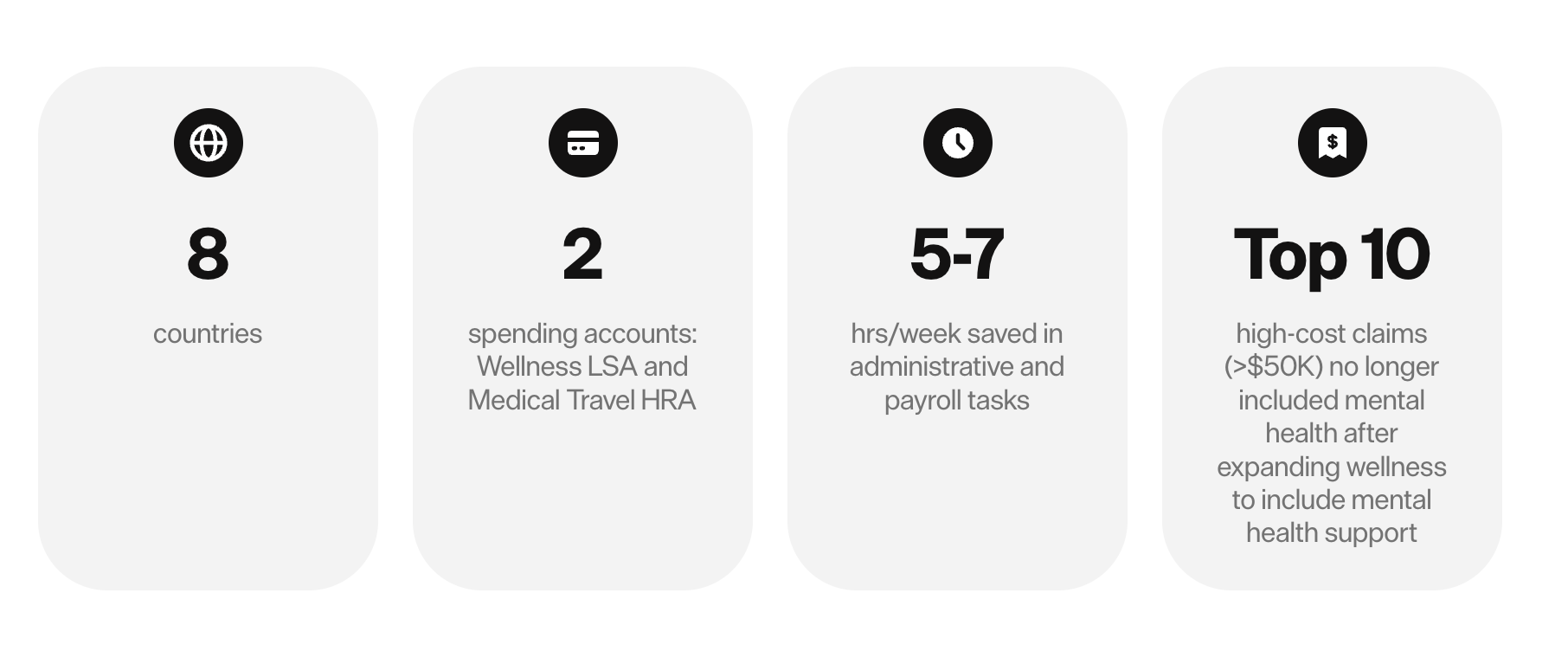
CompTIA, the world's largest vendor-neutral tech certification provider, had cycled through three wellness vendors in five years. Two went out of business, and the third lacked the flexibility to adapt as the program grew. As the only benefits leader at the company, CompTIA's Total Rewards and HRIS Manager also needed a setup that would not add to her own workload as the program expanded across eight countries.
CompTIA moved to Benepass and used the platform's configurable spending accounts to widen its wellness benefit, a direct investment in employee well-being, beyond gym reimbursement, adding mindfulness coaching, fitness equipment, and recreational memberships. In 2021, it expanded eligibility to cover mental health support such as meditation app subscriptions and mindfulness coaching. In 2023, it added a Medical Travel Health Reimbursement Arrangement to guarantee equitable healthcare access across every state where it has employees.
The results were concrete. Mental health claims no longer rank among CompTIA's top 10 high-cost medical claims of over $50,000, a shift the company attributes directly to expanding wellness coverage and a meaningful dent in rising health care costs. The wellness benefit itself sees 80% utilization, and the Total Rewards team now saves five to seven hours a week that used to go to administrative and payroll tasks. Read the full CompTIA case study for more on how the program evolved. Our guide to developing employee wellness programs covers the same design principles that CompTIA applied.
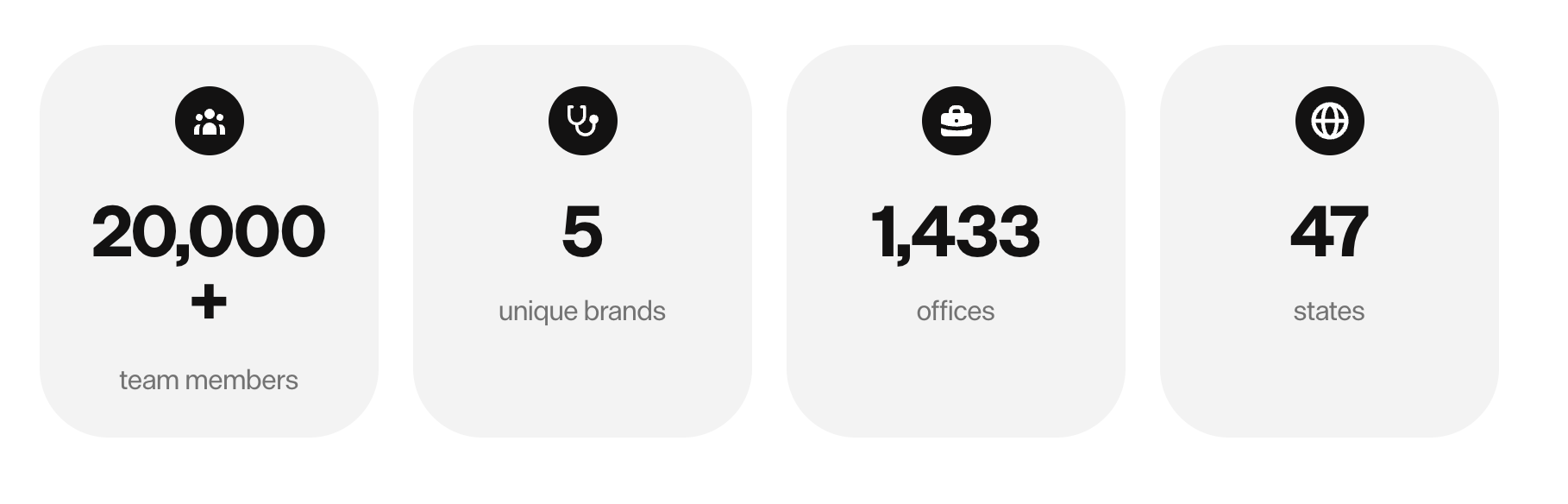
The Aspen Group supports more than 20,000 team members across five brands, including its flagship Aspen Dental locations, spread across 1,433 offices in 47 states. That structure created a specific headache: a legacy vendor that could not handle custom funding across separate business entities, resulting in Workday integration issues, long response times, and the embarrassing problem of employee benefits cards being declined at TAG's own facilities.
The situation came to a head in October 2024, when TAG received one week's notice, in the middle of open enrollment, that its vendor was changing banking relationships and would need to move every HSA account to a new bank. TAG turned to Benepass for a platform that could pull funds from separate operating accounts for each business unit while still giving every team member a consistent experience.
Benepass's implementation team completed the transition in 75 days, moving 3,745 HSA accounts holding several million dollars in assets and 2,100 FSA and commuter accounts during the busiest part of the benefits season. Since going live, TAG has held a 97% claims reimbursement approval rate and 96% card auto-substantiation, with more than 81% of transactions happening on card, and response times under 15 hours during peak enrollment season.
Benepass also proactively added Aspen Dental as an approved merchant, eliminating the card denials that had embarrassed the company at its own facilities. See the full Aspen Group case study for the complete transition timeline.
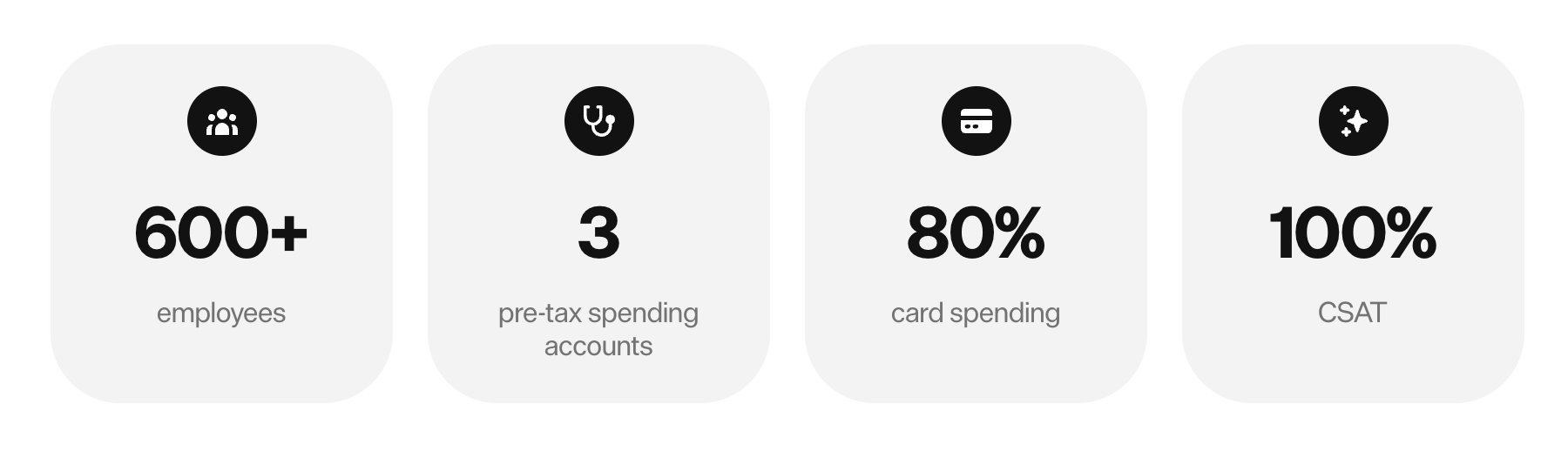
Webflow runs a fully remote team of more than 600 employees across 18 countries. Its previous pre-tax vendor could not properly reflect employer HSA contributions that varied by coverage tier, forcing the benefits team to add those contributions manually every pay period. Inconsistent claims outcomes and slow support on top of that made employees hesitant to rely on their benefits at all.
Webflow selected Benepass in part because the platform let the team build custom inputs to display employer contributions accurately, which also supported a shift from upfront HSA seeding to per-payroll contributions. A dedicated implementation manager and customer engineer ran weekly status updates through the transition, and Benepass's Workday integration removed the manual workarounds Webflow had relied on before.
The employee experience shift was immediate. Webflow now reports a 100% CSAT score on its benefits experience, a 72% first-touch resolution rate on support tickets, and 80% of all benefit spending happening on card, a sign that employees trust the system enough to use it without hesitation. Read the full Webflow case study for the full breakdown of what changed.
Line up CompTIA, The Aspen Group, and Webflow, and a few shared patterns in benefits strategy emerge.
Each company started with a specific problem to solve rather than a general sense that things should improve. CompTIA wanted equitable global wellness access, TAG needed multi-entity funding flexibility, and Webflow needed accurate contribution reporting. In each case, the goal, part of a broader total rewards strategy, shaped the technical requirements, not the other way around.
Each company paid attention to utilization and claims data rather than assuming a new vendor would automatically fix employee engagement. CompTIA tracked which high-cost claims disappeared after a benefit change. TAG watched its claims approval rate and card auto-substantiation. Webflow measured first-touch resolution and card spend. That focus on measurement, using data analytics to track utilization and claims rather than guessing, lines up with the broader market.
Benefits data can also reveal gaps between employer assumptions and employee experiences. According to the 2025–2026 Aflac WorkForces Report, 75% of employers believe their workforce is satisfied with its benefits, but only 65% of employees agree. That 10-point gap shows why teams need to measure utilization, satisfaction and support outcomes rather than assume a program is working.
Flexibility shows up in every story too. Our breakdown of why marketplace-first benefits platforms fall short covers why rigid, one-size-fits-all platforms tend to break down exactly where TAG and CompTIA needed flexibility most.
None of these results came free. Each company weighed the change against its cost, treating potential cost savings as something to verify deliberately rather than assuming a new vendor is automatically cheaper. Our guide to the average cost of benefits per employee is a useful starting point for building that comparison.
All three companies treated rollout and onboarding communication as part of the program, not an afterthought. That matters because MetLife's 2025 U.S. Employee Benefits Trends Study found that 38% of employees say they struggle to understand their benefits and open enrollment communications. A well-designed benefit that employees do not understand will not show up in utilization data, no matter how good the plan design is.
Start by pulling your own utilization data by benefit category, the same way CompTIA tracked its high-cost claims and Webflow tracked card spend. The benchmarking data referenced earlier also breaks out utilization levers by category, useful whether your eligible population is full-time staff, part-time employees, or a mix of both. Entertainment and broad lifestyle spending accounts tend to see utilization above 90%, while categories like professional enrichment, relocation, and mental health often lag well behind, closer to 30% to 44%.
Three levers move that number: simplifying program rules, improving employee education about what is eligible, and matching the spending experience to the category; for example, making a wellness benefit usable at the point of sale rather than through a reimbursement claim.
Next, map out where your current setup breaks down for anyone outside a single, simple team structure. If you manage multiple entities, remote work spread across states or countries, or brands with separate finances the way TAG does, look for a platform built to handle that complexity rather than one that treats it as an edge case.
Finally, treat implementation and communication as part of the program design, not a task to hand off once a contract is signed. Webflow and TAG both cited a dedicated implementation team and regular check-ins as a reason their transitions worked. Benepass's feature set is built around that same idea: one configurable platform for spending accounts, cards, and reporting, with an implementation team attached to it.
Reading about results is one thing. Seeing how a company like yours actually built its program is another. See how real companies built benefits programs that moved participation, retention, financial well-being, and employee satisfaction with Benepass, and what their results could mean for your team. Browse the full library of Benepass customer stories to find an example closer to your own size, structure, or industry.
A credible case study names the specific problem a company faced, describes exactly what changed, and reports a measurable result, such as a utilization rate, a claims approval rate, or hours saved. If a case study only offers general praise without numbers attached, treat it as a testimonial rather than evidence you can act on.
It varies by the type of change. Administrative fixes, like The Aspen Group's 75-day implementation, can show results within a single benefits season. Utilization shifts, like CompTIA's expanded wellness coverage, tend to take a full plan year or more to show up clearly in claims and spending data.
Yes. The underlying patterns, clear goals, attention to utilization data, flexibility, and strong rollout communication apply regardless of headcount. A 50-person company and a 20,000-person company both need to know whether employees are actually using what they are offered.
